Sell Custom Stickers Ranked by What Sellers Actually Net
Sell custom stickers with real numbers: cost per sellable sticker at 10 to 500 units, Etsy fee stacks, letter-rate shipping math, and net hourly pay.

Every custom sticker printing guide on the internet grades the same four things: minimum order, materials, turnaround, and shipping region. Sensible criteria, if you are buying stickers for a product launch or a case of jam jars. They go quiet the moment you try to sell custom stickers, because a buyer comparison scores the purchase while a seller lives or dies on the sale. Rescored for sellers, the field visibly reorders. Shipping class can swing three dollars or more per order, usually wider than the quote gap between two printers at the same tier. Etsy's fee stack takes about 21 cents of every dollar on a $4 single. Hand-weeding your own vinyl can pay less than minimum wage once unpaid hours count.
Stay in the loop.
Get the latest posts and exclusive content delivered to your inbox.
Join 26 readers. No spam. Unsubscribe in one click, anytime.
Stickers are among the cheapest product hustles to start on the printing line, and one of the trickier ones to run at single-sticker prices. The math below prices the four levers that actually decide your margin, per-unit print cost from 10 to 500 units, letter versus parcel postage, the marketplace fee stack on a small order, and what DIY cutting really pays per hour, with every number worked so you can rerun it on your own quotes.
Why Printer Rankings Change When You Sell Custom Stickers
Sticker printing companies publish entry prices because entry prices close deals: $9 for a 10-pack of samples at Sticker Mule, a $26 minimum order value at StickerApp, $2.20 to $5.05 per piece on demand at Printful. None of those figures is a take-home figure. Buyer guides compare them anyway, then rank on minimums and speed.
The questions a seller should ask instead:
| Buyers ask | Sellers should ask |
|---|---|
| What is the minimum order? | What does a unit cost at the quantity I actually restock? |
| Which materials and finishes? | Does the finished product ship as a letter or a parcel? |
| How fast is turnaround? | What does my sales channel skim per order? |
| Where does it print? | How many minutes of my own labor does each order consume? |
The difference is not academic. A printer that wins a buyer list on no-minimum convenience can lose on take-home the moment a design proves itself, because the per-unit cost curve at volume is where the margin lives. The next four sections price each seller question, and the leaderboard near the end re-ranks the same five options on what you actually keep.
Cost Per Sellable Sticker at 10 to 500 Units
Start with the denominator. A sellable sticker survives print inspection, cutting, storage, and the trip to the buyer. Machine-cut runs typically lose 5 to 15 percent to misprints, misweeds, and edge damage, and hand-cut runs lose more while you are learning. Divide your quote by 0.9 rather than 1.0 when you model, or your unit cost is fiction.
Here is how the cost per sticker at 10 versus 500 units typically lands for a standard 3-inch vinyl die-cut:
| Option | ~10 units | ~100 units | ~500 units |
|---|---|---|---|
| Sticker Mule | ~$0.90 (sample tier) | ~$0.70 to $0.90 | ~$0.40 to $0.60 |
| StickerApp | ~$0.55 to $0.85 ($26 order minimum) | ~$0.45 to $0.70 | ~$0.30 to $0.50 |
| Printful (print on demand) | $2.20 to $5.05 each | small discounts from 25 units | still above $1 |
| VistaPrint | ~$1.00 (trial pack) | ~$0.60 to $0.90 | ~$0.30 to $0.50 |
| DIY cutter | ~$0.30 to $0.60 vinyl, plus most of the machine cost | same vinyl, ~$3 machine share | same vinyl, ~$0.60 machine share |
Ranges are illustrative, based on advertised entry pricing. Quotes shift with size, material, finish, and promotions, so price your exact spec on each product page before committing.
Two patterns matter more than any single cell. First, the curve: per-unit cost typically falls steeply from the 10-pack tier to around 100 units as setup, proofing, and handling amortize, then flattens as you approach 500. That flattening caps the value of over-ordering designs that have not proven sell-through. Five hundred stickers at $0.40 that never sell are just $200 in a shoebox. The cheapest way to print stickers to sell is the tier just above your proven weekly rate, no higher.
Second, print-on-demand never joins the curve. Printful's published sticker prices sit at $2.20 to $5.05 per piece at any quantity, with modest bulk discounts from 25 units. That is the standing fee for zero inventory and zero packing labor, and it is why POD belongs in testing rather than steady restocking. StickerApp's die-cut pricing makes its $26 minimum look restrictive until you price the mid-tier, and VistaPrint's sheet sticker pricing behaves like a budget bulk printer once you clear the $10 trial pack of ten.
Sticker Shipping Costs, Letter Rate Versus Parcel
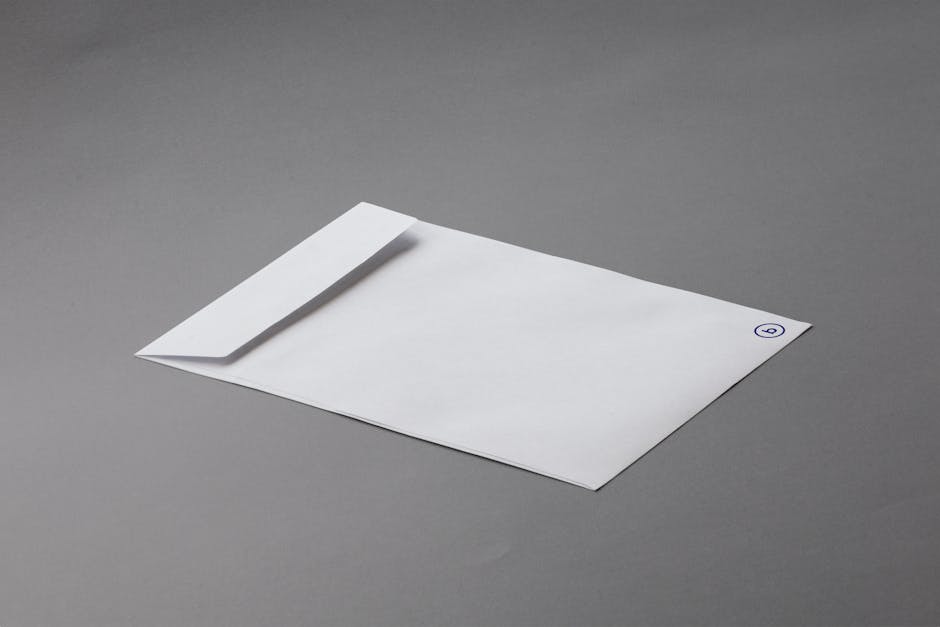
The physical spec of your mailer decides the rate class, and the rate class can move more dollars per order than the printer choice does. A First-Class letter has to stay under a quarter inch thick, uniformly flexible, and free of clasps or bumps. A soft polymailer holding a few vinyl stickers usually qualifies and ships at letter rates, well under a dollar. The USPS nonmachinable letter rules spell out what breaks that status, and rigidity is the big one. The classic stiff cardboard do-not-bend mailer often fails the flexibility test, which either triggers the nonmachinable letter surcharge or pushes the piece into package pricing entirely. Package pricing means USPS Ground Advantage, typically four to five dollars retail for a light 4 oz parcel, softened only partly by marketplace label discounts.
Set that against real orders. A 10-sticker sample run costs about $9, so a parcel label can consume half the print cost of the order. On a single $4 sale netting roughly $2.27 after fees and print, a parcel label erases the profit twice over. The letter-versus-parcel decision is a three-dollar swing per order; the quote gap between competing printers at the same tier is usually measured in dimes. Either use a flexible mailer and stay inside the letter limits, or buy the rigid mailer you love and price the upgrade into a bundle.
The Fee Stack on a $4 Etsy Sticker Order
Etsy sticker fees arrive in three layers, and two of them carry fixed components, which is exactly what punishes low prices.
| Fee | Rate | On a $4.00 order |
|---|---|---|
| Listing fee | $0.20 per listing | $0.20 |
| Transaction fee | 6.5% of item plus shipping | $0.26 |
| Payment processing (US) | 3% plus $0.25 | $0.37 |
| Total before offsite ads | $0.83, about 21% | |
| Offsite ads, if attributed | 12% to 15% | $0.48 to $0.60 |
That is just over 20 percent of item revenue, pushing toward a quarter, before any ad fee. The listing fee covers four months, so it only amortizes when one listing sells repeatedly; model it as a per-sale cost until yours does. Subtract a sample-tier print cost of $0.90 and the $4 single nets about $2.27 before you have bought a mailer or a stamp.
The usual alternative is a basic Shopify storefront, where you swap listing and transaction fees for a monthly subscription plus payment processing, and the crossover point depends entirely on order volume. An Etsy versus Shopify costs comparison is worth a pass before committing either way, because at low volume the subscription can cost more per order than Etsy's stack.
The durable fix is pack size, not channel hopping. A five-pack at $12 pays $1.59 in the same three fees, about 13 percent, and carries roughly $2.50 of bulk-tier print cost, netting $7.91 before postage on one envelope. Same buyer, same artwork, three and a half times the take-home per order. Treat the $4 single as an add-on item from here on.
What DIY Vinyl Cutting Actually Pays Per Hour
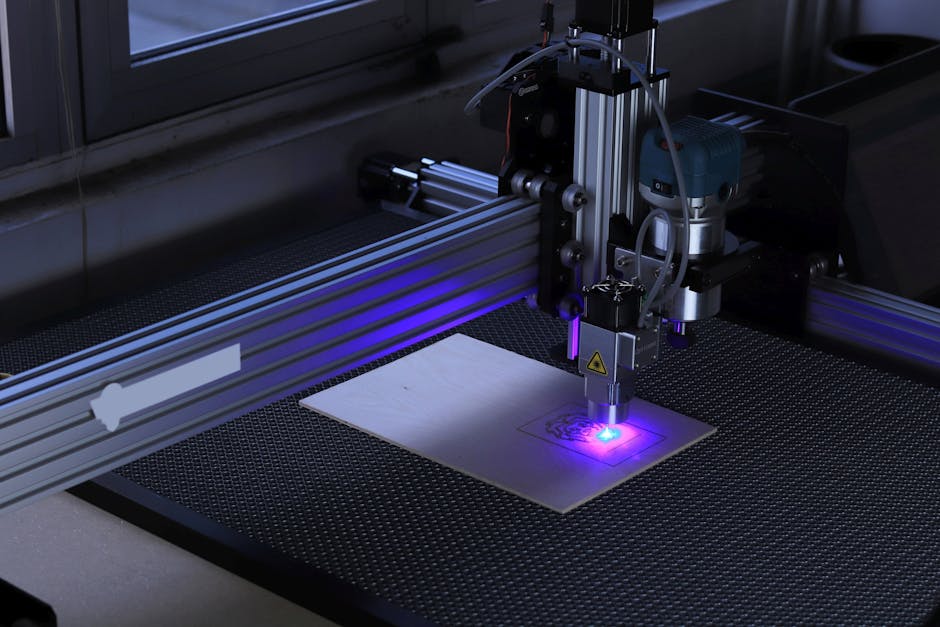
A vinyl sticker cutter business reads like free money once the machine is paid for. Price it in three parts.
Materials. Hobby vinyl plus waste and application tape runs roughly $0.30 to $0.60 per 3-inch sticker. A midrange $300 cutter amortizes to $6 a sticker if you only ever cut 50, and $0.60 if you reach 500.
Throughput. The machine cuts a sheet in minutes. You spend the hour weeding, and hobbyists commonly finish 20 to 40 simple die-cut shapes an hour, closer to 10 for intricate designs. Run a vinyl cost calculator against your own sizes before trusting anyone's ranges, mine included.
Pay. The flattering number first. A $3.50 sale nets about $2.20 after Etsy's $0.79 in fees and $0.50 in materials, so 25 finished stickers an hour implies $55 an hour. That figure assumes every weeded sticker sells instantly and nothing else consumed time, and nothing about it survives a real week. Design, mockups, listings, packing, and customer messages are unpaid labor. Twenty sales a week on ten total hours is about $4.40 an hour at those prices, under the $7.25 federal minimum. So, is selling stickers profitable per hour? At single-sticker prices and hobby volume, usually not yet. At pack-level order values with outsourced printing, it can be.
Where DIY genuinely wins: same-day iteration on new artwork, one-off custom names, and layered multicolor decals that carry $8 to $12 prices. Treat the cutter as a prototyping bench, and outsource any design that proves it can sell.
The Seller Leaderboard, Re-Ranked on Take-Home
For reference, on a $4 item after Etsy's $0.83: a $0.40 bulk print nets $2.77, a $0.90 sample print nets $2.27, DIY at $0.50 in materials nets $2.67 with your labor still unpaid, and a $2.20 POD base nets $0.97 before shipping, which is why POD stickers need $6-plus retail. Score the five options by stage and the buyer ranking inverts:
| Your stage | Buyer-list instinct | Seller pick | Why the flip |
|---|---|---|---|
| Testing unproven designs | Printful, no minimum | Printful, or $9 to $10 trial packs | Risk control wins at exactly one stage |
| A design sells weekly | Fast, no-minimum printers | StickerApp or Sticker Mule at ~100 | Unit cost roughly halves, fees do not |
| Steady restocks | Same | Bulk tier at 250 to 500 | The flattening curve still beats flat POD pricing |
| One-off customs | Any printer | Your own cutter | Premium pricing beats per-unit savings |
Stated plainly: the no-minimum, fast-turnaround names that top buyer lists lead only the testing stage, then fall to the bottom on take-home, because flat per-piece pricing never joins the bulk curve. Sticker Mule versus StickerApp for reselling at the proven tier is a materials-and-quote decision, not a speed decision, since both turn proofs around in days. DIY never leads a stage on effective hourly pay, though it owns the premium-custom corner outright.
Are Stickers Really the Cheapest Side Hustle to Start?
Run the startup ledger honestly:
| Startup item | Cost |
|---|---|
| First print run | $9 to $26 |
| 100 mailers | roughly $10 to $15 |
| Ten Etsy listings | $2.00 |
| Test postage | about $10 |
| Design tools | $0 |
| Total | under $50 |
Few product hustles clear that bar. There is no flipping inventory to buy, no heat press, no equipment beyond a phone camera. You can genuinely start a sticker business on the printing line for under $50, and on that narrow claim the standard hype survives arithmetic.
The running side is where it bends. A steady sticker side hustle carries roughly 21 percent fee load on single-sticker orders, $0.75 to $4.50 in postage depending on class, restock capital every couple of months, and unpaid hours of design, listing, and packing. Per dollar of revenue, that profile sits far closer to other product side hustles than the $50 startup number suggests. Cheap to start is real. Cheap to run is not, until pack sizes and order values climb.
Choosing Your First Print Run and Sales Channel
Every choice above optimizes one thing, what you keep when you sell custom stickers, and the printer is the smallest of the four levers. Collapse it to four decisions.
Quantity by stage. Unproven design: 10 to 50 units or POD. A design sells a few per week: restock 100. Consistent weekly sales: 250 to 500, reordering whenever stock hits four to six weeks of cover. Move up one tier per cycle rather than jumping from 10 to 500 on hope.
Shipping by mailer. Flexible mailer inside the letter limits for standard packs. Rigid mailers only when the look genuinely lifts conversion, and then priced in, because the class upgrade costs more than the mailer itself.
Channel by order size. Etsy while you need its search traffic, with the fee stack priced into packs. Your own storefront once repeat buyers exist, modeled against the subscription crossover. Craft fairs and local shops for cash sales that dodge the stack, at the cost of your table time.
Pricing floor. No listing below 1.5 times the sum of print cost, fees, and postage, and build toward a $10-plus average order value where fixed fees stop dominating.
Rank your decisions in that order, print tier, shipping class, pack size, channel, and you will out-earn sellers who are still shopping on minimums and turnaround.
Stay in the loop.
Get the latest posts and exclusive content delivered to your inbox.
Join 26 readers. No spam. Unsubscribe in one click, anytime.
About the author
Hannah Cole
Senior Editor
Hannah writes practical guides on building income outside a day job, from selling online to beginner investing, with a focus on clear explanations and real benchmarks.
Related Posts

Etsy Seller Fees and Real Take-Home Per Hour by Product Type
Etsy seller fees run from a 0.20 listing fee to 12% offsite ads. See real take-home per hour by digital, handmade, vintage, and craft supply category.

How Much Does YouTube Pay Per View in a $125,545 Month
How much does YouTube pay per view? We break down RyRob's $125,545 October month, zero ad revenue, into what each stream pays and what you can copy.

5 Etsy Alternatives Ranked by Real Take-Home Per Order
Etsy alternatives ranked by fully loaded take-home per order, including the ad spend needed to replace Etsy's organic traffic before you switch.