ChatGPT Ads, What a $10 Daily Budget Actually Buys
ChatGPT ads are here. See what a small daily budget buys in AI answers, when ads pay off for a side hustle, and the freelance niche they create.
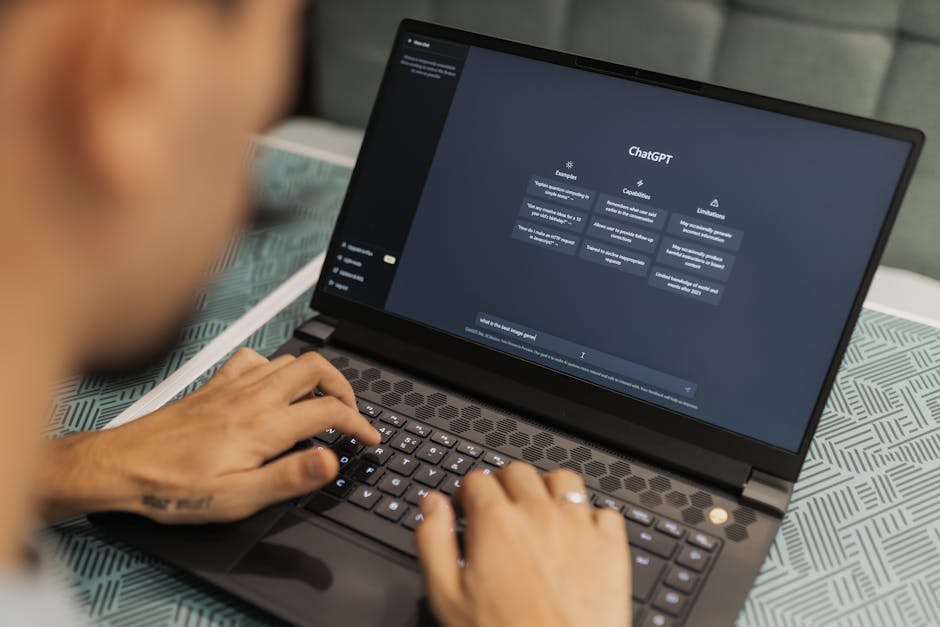
ChatGPT ads are, for now, a better product to sell than to buy. That sentence either saves you $150 or earns you a retainer, depending on which seat you take at the table. OpenAI first surfaced sponsored results inside ChatGPT search in late 2025, Reuters reported the test reaching free and Go tiers in January 2026, and the rollout has kept accelerating since. So the two questions that matter are simple. If you sell a $27 digital product or a $40 service, can a $10 daily ChatGPT ads budget move it? Sometimes, but you would be betting on an auction nobody has data on yet. And is there money in managing these campaigns for confused small businesses? Yes, and the window for that offer is open right now. Buyer math first, seller playbook second.
Stay in the loop.
Get the latest posts and exclusive content delivered to your inbox.
Join 20 readers. No spam. Unsubscribe in one click, anytime.
What ChatGPT Ads Actually Are Right Now
Separate what is confirmed from what is merely reported, because every calculation later in this article depends on the difference.
The confirmed layer is thin. Sponsored placements appear inside ChatGPT's search experience, labeled so users can tell them apart from organic answers. Reuters reported in January 2026 that OpenAI was beginning to test ads in the free and Go tiers, and TechCrunch's rollout coverage followed the format reaching more users, along with advertiser-side details including a self-serve buying path through OpenAI's Ads Manager.
The reported layer is where pricing lives. Early campaigns have reportedly been sold on a CPM basis, meaning you pay per thousand times your ad is shown rather than per click. Rates started high and have been sliding as OpenAI adds inventory. Broad OpenAI self-serve ads access is still emerging, so minimum spends, targeting controls, and how often ads actually appear all remain moving targets.
Treat every number in this market as a snapshot with an expiry date. That is why the buyer math below carries wide error bars, and it is also exactly why a paid guide through the confusion is a sellable service.
The Real Math on a $10 Daily Budget

Everyone's first question is how much ChatGPT ads cost, and the honest answer is that ChatGPT ads CPM pricing is still settling. What early reporting does establish is the shape of the bill. Digiday's early-buyer reporting describes CPM-based deals, with rates that began expensive and have been getting cheaper as inventory scales.
The CPM structure matters more than the rate itself. On a per-click platform, an ad nobody clicks costs you nothing. On a CPM platform you pay for impressions whether or not anyone engages, so the entire bet rides on impressions times click-through times conversion, and all three factors are guesses inside AI answers today.
Suppose you spend $10 a day. Here is what different rate scenarios buy, using a 1% click-through rate and a 3% landing-page conversion borrowed from older channels purely as placeholders:
| Assumed CPM | Impressions per day | Clicks at 1% CTR | Sales at 3% conversion |
|---|---|---|---|
| $10 | 1,000 | 10 | Roughly 1 sale every 3 days |
| $25 | 400 | 4 | Roughly 1 sale every 8 days |
| $50 | 200 | 2 | Roughly 1 sale every 17 days |
Now the other side of the ledger. A $27 product with about $24 of contribution margin after payment fees needs roughly one sale every two and a half days, call it 0.4 sales a day, to break even on $10 a day. Only the most optimistic row in the table clears that bar, and only with an above-average funnel. A few hundred daily impressions is genuinely useful for testing whether your product belongs in AI answers and whether your creative earns a click. It is rarely enough to prove a dependable sales channel for a sub-$50 product.
The shakiest assumption in the table is that 1% click-through rate. Even in classic Google results, a 2026 zero-click study found most searches now end without any click, and an AI answer pulls even harder toward that behavior because the text above your ad usually finishes the job on its own. Break-even instincts imported from Google Ads do not transfer here. You can pay for a thousand impressions inside an experience that was designed to make clicking unnecessary.
When ChatGPT Ads Make Sense for a Side Hustle
Are ChatGPT ads worth it for a small business yet? Three checks give you a defensible answer in minutes, before you spend anything learning how to advertise a side hustle in ChatGPT.
- Margin per sale. You want at least $20 of contribution margin per sale to justify a thin, unpredictable auction. A high-margin digital product or a bookable service clears that easily. A $15 sticker sheet with a one-time buyer does not, because the volume required to matter is volume this inventory cannot yet supply.
- Do buyers actually ask AI about your category? Type the ten questions a real buyer would ask into ChatGPT tonight. If the answers already recommend products like yours, there is a sponsored slot worth testing. If your category never surfaces in AI answers, there is nothing to sponsor yet, no matter how good the ads look in a demo.
- Repeat or recurring revenue. A customer worth $300 across a year forgives an inefficient first sale. A one-off $20 purchase does not, so every impression has to carry its own weight.
The pattern is blunt. High margin plus real AI-visible demand plus repeat revenue equals a capped test worth running. Miss two of the three and you are donating to OpenAI's revenue line.
How to Run a Cheap Test Without Burning Money
If the three checks pass, run the pilot as market research with a receipt, not as a sales channel you are counting on.
- Cap spend at $5 a day for 30 days, a total exposure of about $150 that cannot hurt you.
- Target only queries where your offer is genuinely a good answer, and skip broad category terms where you would pay to appear beside better-known names.
- Send traffic to a dedicated landing page with its own URL or discount code so every sale is verifiable rather than vibes.
- Review once a week against kill criteria you write down before spending the first dollar.
The kill criteria matter more than the setup. Stop if you have spent $100 with zero verified sales. Stop if click-through sits under roughly 0.3% for two straight weeks after one creative revision. Stop if cost per sale runs above twice your margin for two consecutive weeks. Tune the thresholds to your own margins, but set them before day one, because CPM billing means a stalled test still charges you daily for the privilege of being ignored.
ChatGPT Ads vs Google, Meta, and TikTok
The ChatGPT ads vs Google Ads question, for small budgets specifically, comes down to what $150 buys on each platform.
| Channel | Cost model | Intent quality | Data maturity | Small-budget fit |
|---|---|---|---|---|
| ChatGPT ads | Reported CPM | High in theory, unproven | Weeks old | Cheap education, real risk |
| Google Ads | Pay per click | High, queries are explicit | A quarter century deep | Pricey in crowded niches |
| Meta ads | Optimized auction | Low, interruptive | Very mature | Cheapest useful testing |
| TikTok ads | CPM | Low, entertainment first | Mature but creative-hungry | Cheap reach, weak intent |
With $150 total, Meta still buys the most statistically useful data, and Google buys the most purchase intent, with pricing to match in competitive niches. What ChatGPT ads buy is early-auction rates and a first look at advertising in AI answers before your competitors figure it out. If you need sales this month, spend where the data runs decades deep. If you can afford a cheap education and your margin survives the tuition, take the seat nobody has tested yet.
The Freelance Opportunity in ChatGPT Ad Management

Now flip the chair. Every self-serve ad platform in history has spawned a service layer of freelancers and agencies managing spend for businesses that could not or would not do it themselves. A history of AdWords tracks how a self-serve text-ad experiment that launched in 2000 grew into an entire management industry. Facebook Ads repeated the pattern. TikTok Ads repeated it again. In each wave, the early movers captured premium retainers, and rates only compressed once tools matured and case studies went public.
The demand side already exists. Browse Upwork's social media marketing jobs and you will find page after page of businesses paying freelancers to run Meta and TikTok campaigns today. The work is identical in shape to managing AI answer campaigns, learn the platform, target queries, write creative, report honestly. The difference is that almost nobody is standing in the AI answers version of the job yet. If you have been weighing whether to manage AI ads for clients as a freelancer, the timing question is the whole question, and right now the answer favors moving.
Your window is a positioning advantage, not secret knowledge. Once broad self-serve access opens and public case studies circulate, every media buyer who read the same announcement will offer the same thing, and differentiation and pricing will compress together, exactly as they did in every prior wave. Historically that takes months, not years. The freelancers who start now are selling scarcity of experience, and scarcity of experience has a shelf life.
Packaging and Pricing an AI Ads Management Offer
Credibility here means borrowing conventions buyers already understand. Typical PPC management fees run as a percentage of spend, often in the 10 to 20 percent range, or as a flat monthly retainer, and there is no reason to invent new math for a new platform. The cleanest way to offer ChatGPT ad management services is a three-tier ladder that starts small and earns trust before it asks for a retainer.
| Tier | What the client gets | Common starting price |
|---|---|---|
| AI answer audit | Query map, answer-presence check, written go or no-go verdict | $150 to $300 one-off |
| Capped 30-day pilot | Setup, creative, weekly reporting, kill criteria enforced | $400 to $750 flat, client pays ad spend |
| Ongoing management | Monthly optimization and reporting as formats evolve | $400 to $1,000 monthly, or 15 to 20 percent of spend |
Treat those prices as starting points borrowed from PPC norms and adjust them to your market. Position the offer in language a small-business owner actually feels. Two lines that land: "Your customers are asking ChatGPT. I make sure your name is in the answer." And, "Google rents you the results page. This rents you the answer itself."
First clients come from three places. Current clients already paying you for anything marketing-adjacent, who trust you and can say yes in one call. Local businesses you can see running Google or Meta ads, since they have already proven they will pay for clicks. And agencies that need a subcontractor who speaks AI search advertising but do not want to build the skill in-house.
Always pitch the audit, never the retainer. A $200 verdict with honest kill criteria is an easy yes, and sometimes delivering a real "do not spend money on this yet" verdict is the most differentiating move available, because it proves you are selling navigation, not hype.
Risks and Unknowns of the New Ad Platform
Keep both sides of this article honest about what is not known.
- The auction is unproven. Rates could spike as demand arrives or sag as inventory floods in, and your CPM assumptions can be wrong in either direction.
- Formats will change. What you optimize this quarter may not exist next quarter, so label every process you build as provisional.
- Policy volatility is real on a young network, and ad categories that are allowed today may be restricted tomorrow.
- It is one network. A service business built solely on ChatGPT advertising inherits OpenAI's roadmap risk, so pair it with adjacent skills such as answer optimization, landing pages, and conventional paid channels.
For client work specifically, scope month to month, never guarantee outcomes, and put a platform-change clause in every agreement. Selling honesty is what keeps you credible when the platform shifts under you.
Your Next 30 Days as a Buyer or a Seller
If you are buying
- Pick one product and run the three-question filter on margin, AI visibility, and repeat revenue.
- Cap the pilot at $5 a day for 30 days, roughly $150 of total exposure.
- Write your kill criteria down before spending, and enforce them like a contract with yourself.
- Take the verdict either way. A clean no is $150 of market research that saves you a year of hoping.
If you are selling
- Build the one-page audit offer this week, price, deliverable, turnaround.
- List ten local businesses with visible Google or Meta ads, and pitch five before Friday.
- Land one audit, deliver a written verdict with kill criteria, then offer the capped pilot.
- Document every result, because in six months your case studies are the moat.
The $10 question from the opening now has an answer. A small daily budget buys a few hundred impressions and a real read on whether your product belongs in AI answers, which is market research rather than a channel. The channel, for now, is the service layer around the confusion. In 2000 the durable money was not only in the ads, it was in the people who learned the auction first, and this is the same table with new chairs.
Stay in the loop.
Get the latest posts and exclusive content delivered to your inbox.
Join 20 readers. No spam. Unsubscribe in one click, anytime.
About the author
Ryan Callahan
Staff Writer
Ryan reports on extra-income opportunities and personal finance, including side hustles, money-making apps, and investing basics, with a focus on clear, practical analysis.
Related Posts

OpenAI Models for Side Hustles Ranked by API Cost
OpenAI models for side hustles can make or break your margins. Learn which model to route for each task and calculate your true cost per deliverable.
Best AI Website Builders Ranked for Side Hustle Income
We ranked the best AI website builders by real first-year cost, content lock-in, and conversion readiness, plus when to sell AI-built sites as a service.

Price AI Maintenance Retainers and Survive the Day 2 Problem
An AI maintenance retainer protects your margins when third-party API updates break client workflows. Learn five pricing models for ongoing maintenance.