Applying for Freelance Writing Jobs Pays Less Than You Think
Applying for freelance writing jobs often nets single-digit pay per hour. See the math and the three response plays that cut hours per client.

Answer one callout with a hundred replies and you have spent twenty minutes you will never invoice. Answer fifty of them and you have donated a workweek to the comments section. Most advice about applying for freelance writing jobs stops at the surface question, how to stand out when a hundred writers have already commented Interested. The question that decides your income sits underneath it: what does an hour of applying actually pay?
Stay in the loop.
Get the latest posts and exclusive content delivered to your inbox.
Join 13 readers. No spam. Unsubscribe in one click, anytime.
Priced honestly, the answer stings. Treated as unpaid piecework, crowded callouts often net a single-digit effective hourly rate, and what moves that number is the fee on the table, the size of the pile, and whether the poster already knows your name. Pitch polish is the smallest lever in the kit. The model ahead prices the channel honestly, ranks three response plays by hours per signed client, and hands you filters that decide which callouts deserve your evening at all.
The Real Time Cost of One Tailored Application
A response genuinely tailored to a public freelance writing callout typically runs 10 to 30 minutes, and the floor is real. Break it down:
- Read the post twice and skim the poster's recent content so you can cite their actual problem: 5 to 8 minutes.
- Choose the two samples that match and write one line each on the thinking behind them: 5 to 10 minutes.
- Draft the reply so it opens with their requirement, not your résumé: 3 to 5 minutes.
- Leave the public comment, send the DM, and follow up once: 2 to 5 minutes.
One application is a quarter to half an hour of skilled labor. Freelance writing proposals built this way are the only kind that converts, and marketplaces have codified the anatomy; Upwork's proposal guide is a workable skeleton even if you never touch the platform.
Now look at what surrounds you. Most of a 100-reply pile is two-minute blasts: "Interested, DM sent," a naked link, a recycled paragraph about being passionate. They are cheap to send, which is why there are so many, and they rarely get read, which is why adding yours changes nothing. The serious minority numbers in the dozens, not the hundreds. You are competing with them, but you paid real minutes for the privilege, and minutes are the unit this entire channel trades in.
The Effective Hourly Rate of Applying for Freelance Writing Jobs
The whole model fits in one line:
Effective hourly pay = (win rate × expected client value) ÷ hours spent per application
That is the entire cost of applying for freelance writing jobs compressed into a formula. Treat it like a rate card, because it is one. Every input is an assumption you should replace with your own log data; the win rates below are illustrative, not survey findings. What the table exposes is which inputs actually drive the result.
| Scenario | What you are chasing | Minutes per reply | Assumed win rate | Effective hourly |
|---|---|---|---|---|
| $75 blog post, 100+ replies | $75 one-off | 15 | 2% | $6.00 |
| $150 article, about 60 replies | $150 one-off | 20 | 3% | $13.50 |
| $400 case study, 100+ replies | $400 one-off | 25 | 2% | $19.20 |
| $150 article that repeats quarterly | $600 across 12 months | 20 | 2% | $36.00 |
| $600 monthly retainer from a thread | $7,200 first year | 30 | 1% | $144.00 |
Three readings fall out. First, the $75 row is the trap: fifteen careful minutes chasing a fee that pays six dollars an hour at a 2 percent win rate, below the federal minimum wage, while the same craft pointed at a repeating client pays like consulting. Second, expected client value, not the posted fee, is the real input. A $150 one-off and a $600 monthly retainer are different businesses even at identical win rates, so price the relationship (repeat posts, retainers, referrals) before you price the gig. Retainer callouts are also rare and draw the strongest fields, so treat that 1 percent as generous. Third, wording appears nowhere in the formula. Nothing in this math rewards a better adjective.
For calibration, hold those outputs against what the work itself pays. The EFA rate chart and current content writing rate surveys publish specific going rates per word and per project. For the hourly ballpark, freelance writer salary averages from job aggregators and BLS median pay data for writers and authors are the anchors. If your applying wage runs at a tenth of your writing wage, the channel, not your prose, is the defect.
Why Crowded Callouts Collapse Your Win Rate
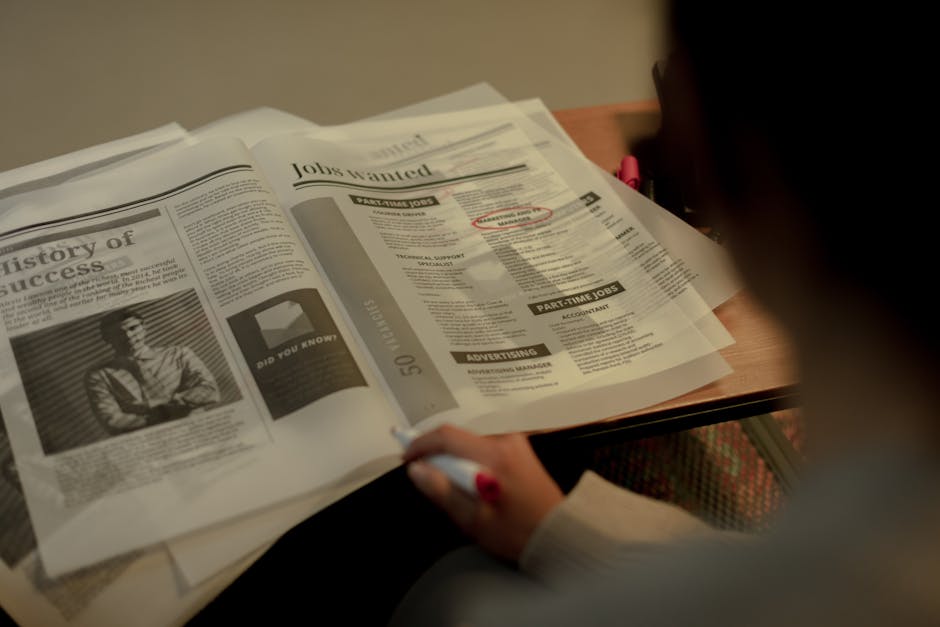
Whether applying to freelance writing job boards is worth it hinges on a variable nobody photographs: the probability of being read at all. That probability falls sharply once visible replies climb past roughly 50 to 100, for three mechanical reasons.
- Triage of the first screen. In my experience running and reading these threads, posters often read the first 10 to 20 replies with care, skim the next batch, and stop. Your meticulously tailored reply at position 87 can be perfect and still never get opened.
- The unread tail. Past the first screen, the pile functions as a queue nobody services. Replies keep climbing because replies are free, which is exactly why a freelance writing job with 100 applicants behaves like a lottery ticket rather than an interview.
- Anchoring. A visible oversupply of writers signals cheap supply, and in practice posters often shave their offered rate or ghost entirely once the pile reassures them that writers are abundant.
There is a fourth pressure now, and it compounds the other three: AI-drafted replies. When a plausible-sounding pitch costs seconds to generate, the generic layer of the pile grows on autopilot, and posters respond by discounting polish altogether. What they screen for instead are signals that a human actually did the work: an SME interview you conducted, original research you can link to, a stated editorial decision about what you would cut. That tilt raises the value of every proof-based play later in this article, because verifiable evidence is the one input a model cannot hand you.
Marketplaces have started exposing the pile problem; Upwork's proposal insights surface activity metrics for jobs freelancers bid on, and public feeds display raw reply counts. Yes, most of those hundred replies are generic blasts, and yes, the qualified competition is smaller, as the stand-out advice correctly notes. But the model already prices that in: a 2 percent win rate on a 100-reply post assumes you are effectively competing with a few dozen real peers and still losing most of the time. The pile beats you with arithmetic, not quality.
The Fast-First Responder Play
How fast to respond to freelance writing callouts
Inside the first hour, when you can manage it. A reply at minute 40 competes with dozens of earlier responses rather than hundreds of later ones, which can materially lift the odds your message gets opened at all. Speed buys you a seat in the screen that actually gets read.
The mechanics
- Turn on post notifications (the bell on X and LinkedIn) for twenty posters who hire repeatedly in your niche.
- Save keyword alerts and searches for "freelance writer wanted," "writer callout," and your niche terms.
- Keep a modular template: three opening lines, three proof paragraphs, one rates line. Assembly, not composition, is the goal.
- Keep a proof bank: one-line case studies ("ghostwrote 12 posts for a fintech founder, three ranked page one") ready to paste.
- Reply, comment, DM, done. Target 15 minutes total, inside the hour.
What speed does and does not buy
In the model, an early reply on a crowded post still converts at only 1 to 3 percent, because early position raises reads, not fit. That lands around 8 to 25 hours per signed client, with a midpoint near 12.5. Speed also costs something off the clock: you are tethered to notifications, and batch reviewers (the ones who close submissions at 48 hours, then read everything) give early replies no advantage. Where fast-first genuinely wins is velocity. It is the only play that can put a signed client, and a first dollar, in your week.
Warm Up the Poster Before the Callout Drops
The cheapest queue jump costs three to five minutes at a time, spent weeks before any callout exists. Pick 10 to 15 posters who hire writers in your niche, then leave genuinely useful comments on their content for two to four weeks: add a data point, answer a question in the replies, extend their argument. Comments like "Great post!" get filtered like spam, because they are spam.
When one of your warmed posters drops a callout, your name arrives pre-vetted. Recognition is the one triage filter that beats position, and a warm reply converts far more often than a cold one; assume 15 to 25 percent when a poster who knows your comments posts work you fit.
The honest accounting includes the wait. Warming 12 targets at roughly five minutes a week costs about an hour a week. If perhaps a quarter of them post a fit callout in a given month and you win one in five of those, the model lands near 7.5 hours per signed client, the best of the three plays. The catch: those weeks of comments are sunk cost for every target who never hires, which is why you warm a portfolio rather than a crush. Warm-up also pays last. It is the strongest play per hour and the slowest path to a first dollar.
Skip the Crowd With Narrow-Niche Direct Contact

Direct contact is the oldest freelance client acquisition move, and the cold pitch vs job boards for freelance writers debate has a per-hour answer: skip the queue entirely and choose who hears from you.
- Build a list of 30 to 40 companies inside one narrow niche (fintech compliance blogs, veterinary SaaS, B2B logistics). Narrowness is the product.
- Create one reusable proof asset for that niche: a strong clip or a spec sample that answers their exact content problem.
- Send 15-minute touches: reference a specific gap in their content, attach one idea, one line of proof, your rate. Ten a week is a sustainable batch.
Assume 10 percent of tightly targeted touches earn a reply and a quarter of replies close. That is 40 touches per signed client, roughly 10 hours, aimed at clients you chose and often at retainer money rather than $75 post money. Both rates are assumptions; replace them with your own numbers, and note that the ranking survives reasonable swings. For a beginner-level walkthrough of the trade-offs, this cold outreach versus job boards comparison is worth twelve minutes.
Beginners should not lead with this play, though. Without niche proof and rate confidence, replies collapse toward zero and you burn leads you will want in six months. Direct contact is the scalable runner-up, and it earns that title only after the proof exists.
The Three Plays Ranked by Hours per Signed Client
| Play | Time per attempt | Win-rate assumption | Hours per signed client | Time to first dollar |
|---|---|---|---|---|
| Warm-up, then early reply | ~1 hr/week across 12 targets, ~10 min to reply | 15 to 25% on warmed callouts | ~5 to 9 (midpoint ~7.5) | Weeks |
| Narrow-niche direct contact | 15 min per tailored touch | 10% reply, 25% of replies close | ~10 | 2 to 6 weeks |
| Fast-first response | 15 min per callout | 1 to 3% on crowded posts | ~8 to 25 (midpoint ~12.5) | Days |
Rankings like this flip, and the flips are the useful part:
- Warm-up falls behind direct contact if fewer than about one in six of your warmed posters ever posts a fit callout. At one in twelve, its hours per client roughly triple and direct contact wins.
- Fast-first passes direct contact when you reliably land in the first ten replies on posts worth $400 or more; at a 3 percent win rate, hours per client drop toward 8.
- Direct contact collapses below fast-first if your reply rate falls under roughly 4 percent, which is what weak proof or an undemonstrable niche produces.
State the limits plainly. These win rates are assumptions, not field data; anecdotes about winning crowded callouts carry survivorship bias; and hours per signed client prices the sale, not the delivery. What the model buys you is a consistent ruler. On that ruler, prior familiarity beats targeting, targeting beats speed, and speed's edge is simply that it starts paying today.
Filters and a Log That Raise Your Real Rate
Selection beats phrasing. Budget signals, post age, and visible applicant count move your effective rate more than any line edit to the pitch, so run every callout through these filters before spending a minute:
- Visible replies. Under roughly 25 and growing slowly: answer now. Past 50, or 100+ within hours: answer only if you are genuinely inside the first hour or already warm with the poster.
- Post age. A few hours old: fast-first is live. Past 24 to 48 hours with a pile already formed: skip, because you are paying full price for tail position.
- Budget signals. A named rate or range, a real brief, a poster who has hired before: answer. Vague scope plus "budget-friendly": skip. For publications, Who Pays Writers shows what they actually pay before you spend the minutes.
- Fit. Proof within one click: answer. Stretching: skip, no matter how good the fee looks.
Then log it, because unpriced channels become guilt loops. Five columns is enough:
| Date | Poster and channel | Expected client value | Minutes spent | Play and outcome |
|---|---|---|---|---|
| Mar 4 | Fintech founder, X thread | $600/yr repeat work | 18 | Fast-first, no reply |
| Mar 6 | Agency MD, warmed 3 weeks | $1,800 quarterly | 11 | Warm-up, sample requested |
Each Friday, divide value won by minutes logged and compute the week's applying wage per play. Fifteen minutes of arithmetic keeps the channel priced instead of guessed.
That is the whole reframe. Every hour spent applying for freelance writing jobs is billable time sold at your win rate, and the win rate is mostly decided before you type a word: by which callout you chose, when you arrived, and whether your name was already in the poster's head. Polish the pitch after you fix those, never before. You are paid to select, not to apply.
Stay in the loop.
Get the latest posts and exclusive content delivered to your inbox.
Join 13 readers. No spam. Unsubscribe in one click, anytime.
About the author
Dana Whitfield
Staff Writer
Dana covers the many ways people earn more, including quick-money apps, service-based work, digital products, and passive income, using rate surveys, marketplace data, and industry research.
Related Posts

Freelance Referral Networks vs Upwork and Cold Outreach
A freelance referral network beats Upwork bidding and cold outreach on spare hours and fee drag, with a 90-day reciprocity playbook for side hustlers.

5 Ways to Find Client Email Addresses, Ranked by Real Cost
Find client email addresses for cold outreach and verify every one before sending, with five methods ranked by cost per verified address and call.

The EditingServices.com Commission, Priced Like a Service
The EditingServices.com commission is 50%, but that half buys outsourced client acquisition. See the break-even math and the exact triggers for leaving.