Best Print on Demand Marketplaces Ranked by $25 Take-Home
Best print on demand marketplaces ranked by real take-home on one $25 order, with fees, forced ads, and traffic compared across Etsy, Amazon, Redbubble.

Etsy can keep $6.58 of a $25 t-shirt order before you have paid a single cent for the shirt itself. That number appears nowhere in the roundups ranking the best print on demand marketplaces, and the gap is not an accident. Most of those lists come from fulfillment companies that earn the moment you connect a store, so they grade platforms on catalog size and audience instead of on what survives the fee stack on a real order.
Stay in the loop.
Get the latest posts and exclusive content delivered to your inbox.
Join 13 readers. No spam. Unsubscribe in one click, anytime.
Run one constant $25 order through each platform's published fee schedule and the familiar ranking scrambles. Etsy's mandatory Offsite Ads fee can cost more than its listing, transaction, and payment processing fees combined. Amazon Merch pays a fixed royalty you cannot move much. And the channel with the lightest fees, your own Shopify storefront, brings you exactly zero buyers. Take-home per order and the odds of getting an order point in opposite directions across this market, which is why the right zero-audience play is a two-channel sequence, not one winner.
How the $25 Order Test Works
Every comparison below follows the same five rules, so the numbers stay comparable and you can rerun the math at any price point.
- One constant order. A single $25 US order for one midweight cotton tee, nothing else in the cart.
- Shipping handled honestly. On Etsy, eBay, and your own store you set shipping, so the test assumes free US shipping priced into the $25. On Amazon Merch and Redbubble the platform controls fulfillment, and shipping is already inside the base cost or the royalty.
- Fees first, product cost second. Platform fees are counted first. Then a like-for-like net figure subtracts a typical fulfillment base cost of roughly $12 to $14 per tee, the range you commonly see at Printful or Printify.
- Published schedules only. Numbers come from each platform's fee documentation, linked throughout, as of this writing. Platforms change rates, so recheck before you price.
- Mandatory costs only. Optional ad spend, subscriptions you can skip, and your own time are excluded except where noted.
That makes this a strict print on demand fees comparison. It measures what the platform takes, not how hard you are willing to hustle.
Etsy Fees on a $25 Order
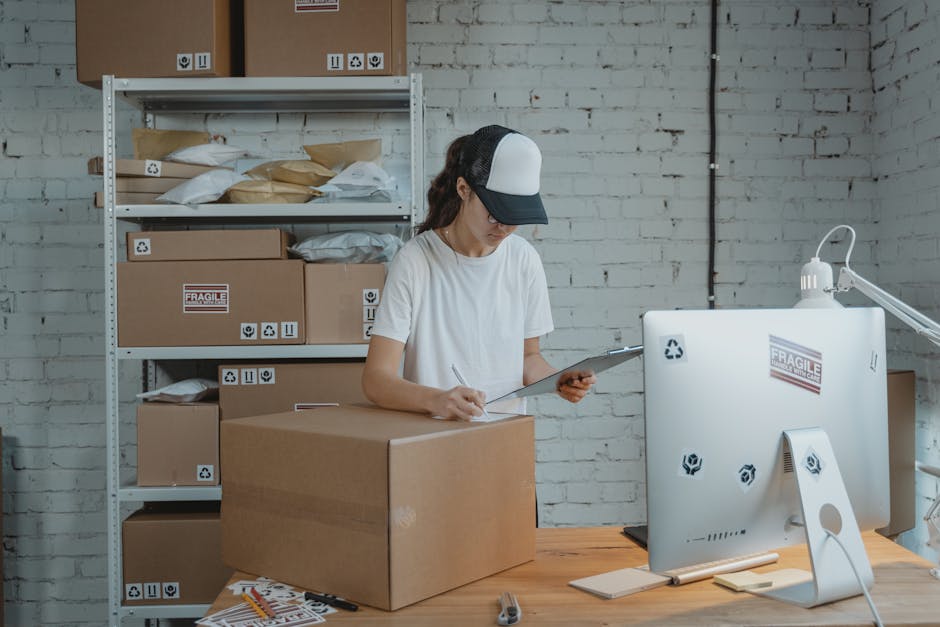
How much does Etsy take on a $25 order? It depends on one variable no roundup headline mentions: whether Etsy attributes the sale to its own advertising.
| Etsy fee | Rate | On a $25 order |
|---|---|---|
| Listing | Flat | $0.20 |
| Transaction | 6.5% | $1.63 |
| Payment processing, US | 3% + $0.25 | $1.00 |
| Subtotal, every order | $2.83 | |
| Offsite Ads, on attributed orders | 15% | $3.75 |
| Total when Offsite Ads applies | $6.58 |
The first three lines leave you $22.17 before product cost, per Etsy's full fee stack. Roughly $12 to $14 of that goes to the shirt, so a clean organic sale nets about $8 to $10. A handful of US states add a small regulatory operating fee on top, and most new shops pay a one-time setup fee, recently $15 in the US.
How Offsite Ads Changes the Math
Etsy enrolls every seller under $10,000 in trailing 12-month sales in Offsite Ads and does not allow opt-out. The 15% fee only hits orders attributed to an ad click, per Etsy's official fee policy, but for a shop with zero followers, ad-attributed orders are commonly a large share of early sales. When one lands, the Offsite fee alone, $3.75, exceeds the other three fees combined, $2.83, and the total grab of $6.58 is about 26% of the order before product cost. That leaves roughly $4.50 to $6.50 once the shirt is paid for.
Does Offsite Ads make Etsy unprofitable for new sellers? It makes thin pricing unprofitable. A design that only works at $25 will bleed on ad-attributed orders, while the same design listed near $28 to $30 keeps a survivable margin when the 15% lands. Once you clear $10,000 in trailing sales, the rate drops to 12% and participation becomes optional, which is one more reason growth, not fee-dodging, is the real fix.
Worth noting: the most shared marketplace roundup online, published by a fulfillment company, lists Etsy's costs as the $0.20 listing fee plus 6.5%, then adds that "additional Etsy payments/ads fees may apply." That parenthetical is the single biggest line item on the order.
Amazon Merch on Demand Royalty on a $25 Order
Merch collapses the whole fee conversation into one number. No listing fee, no transaction fee, no payment processing, no ads program. The Amazon Merch on Demand royalty equals list price minus applicable taxes minus Amazon's print cost, and Amazon shows you the exact figure before you publish. On a $25 standard tee, expect the mid single digits, commonly around $5 to $6.
That payout is predictable and capped. To earn more per order you must raise list price, and Amazon shoppers tend to punish that, so most sellers grow by adding designs rather than margin. Shipping is Amazon's problem, Prime badge included, and your royalty never moves because of it.
The binding constraint for a beginner is acceptance, not cost. You apply, you wait (sometimes weeks or months), and new accounts typically start at a 10-design tier. The Merch application process rewards a coherent portfolio and patience over speed. Apply early precisely because the queue does not care about your launch date.
Redbubble Artist Margin on a $25 Order
Redbubble works differently. You set an artist margin as a percentage of the product's base price, with a 20% default. A classic tee's base price generally sits in the low $20s, so the default Redbubble artist margin commonly pays about $4 to $4.50 per shirt. The platform handles production, payments, returns, and its own marketing, and how Redbubble calculates payments fits on one help page.
The trade is upside for reach. Redbubble and its siblings surface designs by artists with zero followers to browsing strangers, which is exactly what a new seller cannot buy cheaply. Push the margin to 30% and your retail price climbs out of the impulse zone for a price-sensitive audience, so the default is often the rational setting. TeePublic, the closest sibling, publishes flat per-item rates, around $4 on a standard tee per TeePublic's published earnings rates.
Redbubble vs Etsy take-home per shirt is closer than partisans admit. On an ad-attributed Etsy order the two channels land within about a dollar of each other after product cost. Only a fully organic Etsy sale pulls clearly ahead.
eBay Fees on a $25 Order
eBay print on demand fees per order come down to one line. The eBay final value fee runs roughly 13.6% plus $0.30 in most categories, with payment processing included. On $25 that is about $3.41 plus $0.30, or $3.71 total, leaving $21.29 before product cost and roughly $7 to $9 after.
The percentage beats Etsy's 6.5% base transaction fee, but the structure is friendlier to beginners. Casual sellers currently get a monthly batch of free insertions, commonly around 250, so per-listing cost sits at zero for a first store. There is no forced ads program; Promoted Listings is opt-in. With no Offsite equivalent, a single $25 order nets more on eBay than Etsy's ad-attributed $18.42, every time.
Two cautions keep this channel legitimate. eBay allows print on demand, but production time has to fit inside the handling window you state, and a flaky supplier is what actually ends POD accounts there. eBay search also rewards specific, searchable designs (slogans, hobbies, professions) over art-brand browsing. You set shipping yourself, so underpricing it comes straight out of your margin.
A Shopify Print on Demand Store on a $25 Order

This is the per-order champion. With Shopify Payments in the US at roughly 2.9% plus $0.30, a $25 order pays about $1.03 in fees, leaving $23.97 before product cost and around $10 to $12 after, the best realized margin in this set. Fulfillment apps from Printful or Printify install free and charge only product cost.
Then the fixed cost arrives. Basic runs about $29 to $39 a month depending on billing term, per Shopify's current pricing, which is roughly $348 to $468 a year before a single sale. The marketplace advantage is gone, too: every visitor must be earned through content or bought through ads, and paid clicks on apparel routinely cost more than an $11 margin supports.
The per-order winner and the worst first channel are the same platform. A Shopify print on demand store is where you graduate once something already sells, not where you discover whether anything sells.
Ranking the Best Print on Demand Marketplaces
Take-Home Before and After Product Cost
| Channel | Fees on the $25 order | Net after product cost | Who brings the buyer |
|---|---|---|---|
| Shopify + fulfillment app | ~$1.03 + subscription | ~$10 to $12 | Only you |
| eBay | ~$3.71 | ~$7 to $9 | Mostly eBay search |
| Etsy, organic sale | ~$2.83 | ~$8 to $10 | Split, Etsy and you |
| Amazon Merch | Royalty model | ~$5 to $6 | Amazon |
| Etsy, Offsite Ads sale | ~$6.58 | ~$4.50 to $6.50 | Etsy's ad spend |
| Redbubble / TeePublic | Margin model | ~$4 to $4.50 | Mostly the platform |
Who Brings the Buyer
Read the last column and the question of which print on demand site pays the most per sale flips. The channels with the best POD profit per sale, Shopify, then eBay and organic Etsy, demand that you supply the demand. The channels with the weakest payouts, Redbubble, TeePublic, Amazon Merch, spend their own money and brand to send strangers to designs by unknown artists. For a seller starting from zero, that makes a traffic-owning marketplace the best print on demand platform with no audience, even at a smaller cut.
The Etsy vs Amazon Merch vs Redbubble version of this debate is really a traffic question. Etsy holds strong gift-buyer intent but makes a new shop claw for visibility. Amazon converts its own Prime-conditioned buyers and hides your brand entirely. Redbubble runs its own marketplace marketing and pays the smallest cut for the favor.
Rank by take-home only once you control your traffic. Until then, rank by who can send a stranger to your shop, and treat the smaller cut as the cost of discovery.
First-Year Costs and Which Channel to Open First
| Channel | Fixed first-year cost | Realistic time to first sale |
|---|---|---|
| Redbubble / TeePublic | $0 | Unpredictable, but free to find out |
| Amazon Merch | $0 | Gated by the application queue |
| eBay | $0 with free insertions | Quick in searchable niches, slow outside them |
| Etsy | ~$15 setup + $0.20 per listing | Often weeks for a new shop, per seller reports on how long until first sale |
| Shopify + app | ~$348 to $468 | Will not happen until you bring buyers |
The launch order for a zero-audience seller falls out of both tables.
Open first, this week, at $0 risk. Upload every finished design to Redbubble and TeePublic at default margins, and submit the Amazon Merch application the same day. None of these charge anything to open, and all three can surface a design to strangers without a single follower on your side. Worst case, you learn which designs convert before spending anything.
Open second, once anything sells. Etsy is the conversion engine, but enter with 20 or more listings priced near $28 to $30 so the 15% Offsite Ads fee is survivable, and budget roughly $20 all-in for the setup fee and listing fees. Let whatever sold on the free platforms choose your Etsy designs.
Hold the other two. eBay is a free experiment whenever you have designs that match searchable niches. Shopify waits until you have repeat buyers or an audience that would otherwise leak, because only then do its best-in-class margins have orders to apply to.
The $6.58 Etsy number from the opening is reproducible, and so is every other figure here, straight from the platform's own published schedules. That is the test the roundups skip, and once you can run it yourself, no list gets to choose your first sales channel for you.
Stay in the loop.
Get the latest posts and exclusive content delivered to your inbox.
Join 13 readers. No spam. Unsubscribe in one click, anytime.
About the author
Ryan Callahan
Staff Writer
Ryan reports on extra-income opportunities and personal finance, including side hustles, money-making apps, and investing basics, with a focus on clear, practical analysis.
Related Posts

Best Affiliate Marketing Niches for Beginners in 2026
Ranks the best affiliate marketing niches for beginners by take-home per 1,000 clicks and per hour, with copyable math instead of headline rates.

How to Make Money Blogging in 2026, Ranked by RPM
How to make money blogging in 2026, ranked by what each method pays per 1,000 visits at low traffic, so you launch in the order that pays first.

Online Clothing Store Startup Costs by Business Model
Online clothing store startup costs and real profit margins compared across print on demand, wholesale dropshipping, and bulk inventory models.