Real Dropshipping Profit Margins After Ads and Fees in 2026
Dropshipping profit margins of 10 to 30 percent sound great until you subtract ad spend, returns, and fees. Here is what a real sale nets in 2026.
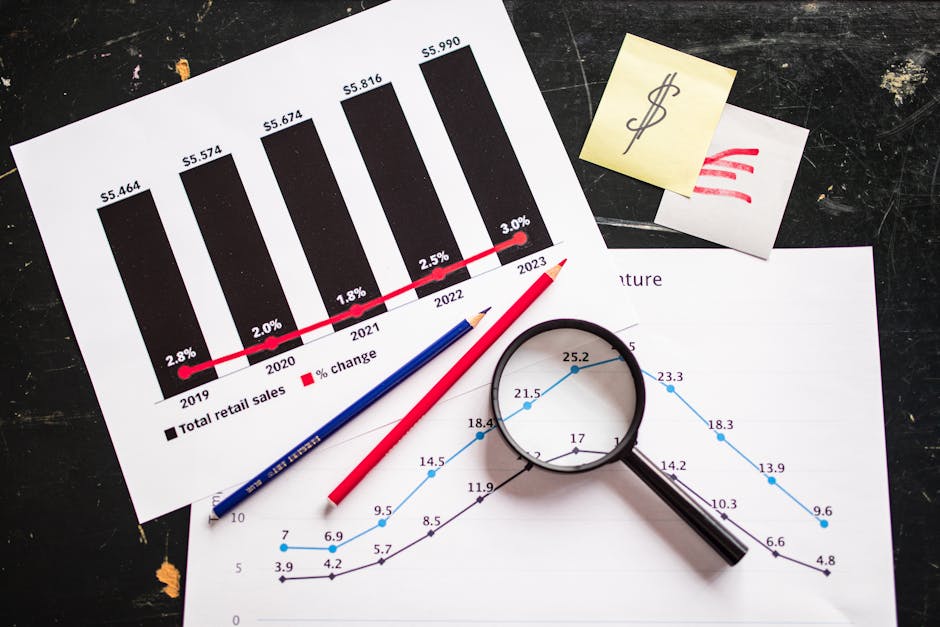
The 10 to 30 percent figure quoted across dropshipping statistics is defined as a net margin after product costs, shipping, platform fees, and advertising. What that range leaves out is the costs surveys tend to miss: unpaid owner labor, ad-testing losses most operators absorb before finding a winner, and the fact that 10 percent net on a $55 order is just $5.50. This article traces one representative order through every cost layer, converts the result into an effective hourly rate, and gives you the framework to run the same decomposition on your own niche.
Stay in the loop.
Get the latest posts and exclusive content delivered to your inbox.
Join 13 readers. No spam. Unsubscribe in one click, anytime.
Why the Quoted Dropshipping Profit Margins Mislead
The source that anchors the 10 to 30 percent figure defines it explicitly as net, after product costs, shipping, platform fees, and advertising. That framing is accurate. Three things the range still conceals catch beginners off guard.
First, the band is wide. Ten percent net and 30 percent net are radically different businesses, and new sellers almost universally land at the bottom, below 15 percent, because they have not yet optimized creative, supplier terms, or return rates. Second, "net" in industry surveys typically excludes unpaid owner labor and the ad-testing losses most operators absorb before finding a winning campaign. The source itself notes that new sellers underestimate what a sale actually costs. Third, 10 percent net on a $55 order is $5.50, a thin dollar amount that only becomes meaningful at volume.
The worked example later in this article produces $5.66 net on a $55 order, which sits right at the bottom of that range. The rest of the article walks each cost layer so you can see exactly how that number comes together and where the levers to improve it live.
Layer One, Product Cost and the Gross Margin Ceiling
Your supplier's per-unit price plus shipping sets the hard ceiling on everything that follows. A $50 product that costs $22 sourced and shipped leaves $28 in gross margin, or 56 percent. That is the best-case number before marketing touches it.
Commodity niches with heavy competition (generic phone accessories, standard apparel) often compress gross margin to 30 to 40 percent, leaving almost no room for acquisition costs. The ceiling matters because every subsequent layer subtracts from it. If your gross margin is 35 percent and your ad CPA consumes 25 percent of revenue, you have 10 percent left to cover returns, processing, subscriptions, and your time.
Niche selection, supplier negotiation, and custom or private-label products are the only levers that raise this ceiling. Cheaper suppliers help, but racing competitors to the lowest price compresses the ceiling further rather than relieving it.
Layer Two, Ad Spend and the Real Margin Killer in 2026
Paid acquisition is where most dropshipping profit margins die. Operators frequently report blended Facebook and TikTok CPA ranging from the low teens to upwards of fifty dollars per purchase in 2026, depending on niche, creative quality, and average order value. Performance analytics resources from platforms like Triple Whale offer ongoing context across verticals, and the pattern operators describe is consistent: blended CPA frequently consumes 20 to 40 percent or more of revenue on a competitive product.
Two structural forces make this harder than the pre-2021 era. Rising CPMs as more advertisers compete for the same audiences is a trend widely discussed across the ecommerce community, including in social media ad commentary on platforms like LinkedIn. Signal loss from privacy changes means pixel attribution is noisier, forcing broader targeting and higher effective CPAs. Creative fatigue also hits faster now: a winning ad can decay sharply within two weeks as frequency climbs, and most new operators do not notice until the margin is already gone.
Before you launch any campaign, calculate your break-even CPA. If your gross margin on a $50 order is $28, your break-even CPA is $28. Every dollar above that is profit, every dollar below is loss. Set a kill threshold and cut campaigns that exceed a set spend without a sale.
Layer Three, Returns, Chargebacks, and Refund Leakage
Return rates in ecommerce vary sharply by category. Return rate statistics show apparel commonly running near 20 to 30 percent, while hard goods sit closer to single digits. Dropshippers face a structural disadvantage here: when a customer returns an item, you refund the full price but rarely recover the original shipping cost, and you cannot restock returned inventory the way a traditional retailer does. The loss is real and unrecoverable.
Chargebacks compound the problem. Chargeback rate data indicates that ecommerce chargebacks tend to run higher than baseline retail, and dropshipping is particularly exposed because long shipping times and unfamiliar brand names trigger "item not received" and "unauthorized purchase" disputes. Each chargeback carries a processor fee, typically $15 to $25, on top of lost revenue and sunk product cost.
The margin math is brutal on a $50 order with a 25 percent return rate. One in four orders generates a full refund plus lost shipping. That effectively taxes every surviving order by roughly 25 percent of gross margin. If your gross margin was $28, return leakage can erase $7 of it before you count chargebacks, processing, or subscriptions.
Layer Four, Payment Processing and Platform Subscription Fees
Payment processing is the most predictable cost layer and the easiest to underestimate. Shopify Payments, Stripe, and PayPal typically charge around 2.9 percent plus thirty cents per domestic transaction, with Stripe's published pricing and Shopify's fee structure confirming this baseline. International and currency-converted orders run higher, often 3.5 to 4 percent plus a fixed cross-border fee.
On a $50 order, 2.9 percent plus $0.30 equals $1.75. Manageable in isolation, but it compounds with the other layers.
Platform subscription is the sneakier cost. Shopify plan comparisons show monthly plans ranging from roughly $39 for the Basic tier to over $2,000 for Plus. At low volume, the per-order allocation of this fixed cost is where beginners get hurt. If you run 50 orders a month on a $39 plan, that is $0.78 per order. If you run 10 orders a month, it is $3.90 per order, which can exceed your product gross margin on a thin niche. App subscriptions (email tools, review apps, inventory sync) stack on top, and auditing these monthly matters because subscription creep is one of the most common reasons a store that looks profitable on a dashboard quietly loses money.
Worked Example, Tracing One Order to Actual Net Profit
Take a representative $55 order in a competitive 2026 niche. These are realistic mid-range assumptions, not best or worst case.
| Cost Layer | Assumption | Amount |
|---|---|---|
| Revenue | $55 order | +$55.00 |
| Product cost and supplier shipping | 44% of revenue | -$24.20 |
| Gross margin | $30.80 (56%) | |
| Ad CPA (blended Meta and TikTok) | 28% of revenue | -$15.40 |
| Return leakage (20% category rate applied to surviving orders) | ~20% of gross margin | -$6.16 |
| Payment processing | 2.9% + $0.30 | -$1.90 |
| Chargeback allocation | 1% rate, $20 fee amortized | -$0.20 |
| Shopify subscription (40 orders/mo on $39 plan) | $0.98/order | -$0.98 |
| App subscriptions (estimated) | $0.50/order | -$0.50 |
| Net profit per order | $5.66 |
That $5.66 is before your own labor. It is also before taxes, and it assumes the ad campaign that produced this order was not one of the losing tests that most new operators fund before finding a winner. Factor in a realistic test-to-winner ratio, and the blended net across all campaigns (including losers) frequently sits between break-even and negative for the first several months.
The point is not that $5.66 is impossible to improve. The headline "20 percent margin" on a $55 order sounds like $11, and the fully loaded reality is roughly half that, before you count the hours spent on creative, customer service, and supplier coordination.
From Net Profit to Effective Hourly Rate

Dropshipping labor is real, even when it is unpaid. A new operator typically spends 10 to 15 hours per week on product research, ad creative, store optimization, customer support, and supplier communication. At 12 hours per week and 50 weeks per year, that is 600 hours annually.
If a store nets $5.66 per order and runs 120 orders per month, monthly net profit is roughly $679. Over a year, that is about $8,150. Divided by 600 hours, the effective hourly rate lands near $13.58. The federal minimum wage sits at $7.25 per hour, but many states mandate $15 or more. In those states, this operator earns below minimum wage for their labor, and the gap widens if order volume is lower or ad CPA is higher.
Running this calculation before you start lets you set a realistic stopping point. The same decomposition applies to any dropshipping niche or product you are considering: plug in your own ad CPA, return rate, and gross margin to see whether the hourly rate clears your threshold.
Levers That Actually Move Dropshipping Margin
Each lever below replugs the $55 order from the worked example to show the exact dollar impact.
Raise AOV from $55 to $65
AOV benchmarks confirm that bundling and free-shipping thresholds are the cheapest way to add revenue per transaction. On this order, the extra $10 still carries the same $15.40 ad CPA, so most of it falls to the bottom line. Product cost on $10 more at 44 percent is $4.40, processing adds $0.29, and return leakage rises slightly to $7.28. Net climbs from $5.66 to roughly $9.85, a 74 percent jump from a $10 cart bump.
Convert a First-Time Buyer into a Repeat Buyer
A second order from the same customer carries near-zero ad CPA, since email and retention cost little per send. Strip the $15.40 ad line and net jumps to roughly $21.06. Blended across the two orders, average net rises from $5.66 to $13.36, which is why repeat purchase rate is the biggest lever for stores with a winning product.
Cut Return Rate from 20 to 12 Percent
Return leakage on the $55 order drops from $6.16 to $3.70 when the category return rate falls to 12 percent. That $2.46 goes straight to net, lifting per-order profit from $5.66 to $8.12. Clear sizing charts, honest photography, and accurate descriptions are the tools that get you there.
Shift 30 Percent of Traffic to Organic and Email
If paid CPA stays at $15.40 but 30 percent of orders come from organic search or email at zero acquisition cost, blended CPA falls to $10.78. That $4.62 savings pushes net from $5.66 to $10.28 without touching the product, the price, or the ad creative.
Should You Start Dropshipping in 2026
Dropshipping industry data suggests that a meaningful share of new stores never reach consistent profitability. The cost decomposition above explains why: the worked example produced $5.66 net per order and an effective hourly rate of $13.58, which sits below minimum wage in many states.
The decision framework is straightforward. Run the decomposition on your own niche using realistic ad CPA, return rate, and gross margin. Calculate your effective hourly rate. Compare it to what you could earn elsewhere for the same hours. If that rate falls below your opportunity cost, the model fails regardless of what the headline margin says.
Dropshipping can work, but only for operators who run this math first and keep running it weekly. The margin quoted by suppliers and the net that hits the bank are two different numbers, separated by a cost stack that most coverage never traces.
Stay in the loop.
Get the latest posts and exclusive content delivered to your inbox.
Join 13 readers. No spam. Unsubscribe in one click, anytime.
About the author
Marcus Reed
Staff Writer
Marcus writes about side hustles and extra income, from gig apps and freelancing to online business and investing, drawing on public data, platform reports, and reputable sources.
Related Posts

What the Amazon Influencer Program Really Pays per Video
A reported $25,000 to $30,000 Amazon Influencer Program month sounds life-changing. We price the 500-video ramp behind it and compute the real hourly rate.

Best Print on Demand Marketplaces Ranked by $25 Take-Home
Best print on demand marketplaces ranked by real take-home on one $25 order, with fees, forced ads, and traffic compared across Etsy, Amazon, Redbubble.

Walmart Return Pallets Ranked by Real Take-Home Per Hour
Walmart return pallets pitch manifest retail value. We trace one pallet through unsellable items, fees, and unpaid hours to the real hourly rate.