Mystery Shopping Pay Versus the Real Hourly Rate
Mystery shopping pay hides unpaid hours. We break down real hourly rates for bank, gas station, and retail shops to show which assignments actually pay.

A bank assignment advertised at $150 sounds like a premium hourly rate, until you divide that payout by the full clock rather than the minutes spent at the teller counter. Mystery shopping pay is almost always quoted per assignment, which conveniently hides the unpaid scaffolding around every visit: the commute, the briefing you memorize beforehand, and the narrative report you file afterward. Once those hours enter the denominator, the headline figure drops toward what an entry-level shift pays, and only a narrow slice of assignments survives the math.
Stay in the loop.
Get the latest posts and exclusive content delivered to your inbox.
Join 13 readers. No spam. Unsubscribe in one click, anytime.
This piece does that arithmetic out loud. The aim is not to talk you out of mystery shopping. Done selectively, it is legitimate, flexible side income. The aim is to hand you the formula for separating the shops that reliably clear $25 to $30 per verified hour from the ones that dress up minimum-wage work with a flashy payout number.
The Real Math Behind Mystery Shopping Pay
Every example in this article uses one equation:
Effective hourly rate = flat fee payout ÷ total committed time
Total committed time means every minute the assignment costs you, not just the time you are inside the store. A shopper who counts only on-site time will always overestimate earnings, because on-site time is the smallest slice of the commitment.
Consider a retail shop that pays a $12 flat fee for roughly 15 minutes inside the store. Read at face value, that is $48 an hour. Add a realistic overhead stack (a 10-minute briefing read the night before, a 20-minute round-trip drive, and a 25-minute report with photo uploads), and the commitment becomes 70 minutes. The real rate is $12 ÷ 1.17 hours, or about $10.30 an hour. The "hourly" figure collapsed by nearly 80 percent, and nothing about the job changed except the denominator.
This is the core gap. The industry markets the numerator (payout), and shoppers supply their own denominator (time) without realizing it. So when someone asks how much mystery shoppers make per hour, the honest answer has two values depending on which denominator you choose. The sections below apply the equation to the four most common assignment categories.
How Much Do Mystery Shoppers Make?
The short answer: anywhere from $0 to $30 per verified hour, depending on assignment type. Bank shops tend to land around $12 to $20 once heavy report requirements are factored in. Gas station audits clear $25 per hour when chained into a route but drop toward minimum wage as standalone trips. Retail shops frequently fall to $10 to $12 once commute is included. Reimbursement-only assignments pay $0 in cash wages regardless of how large the headline figure looks.
The Hidden Time Costs Most Shoppers Never Count

Before the category math, it helps to itemize the unpaid task stack, because these are the line items recruiters leave out. Mystery shopping hidden time costs fall into a predictable set of buckets, and each one is uncompensated. The time ranges below reflect practitioner experience and common scheduler guidelines rather than published industry surveys, so treat them as planning estimates.
| Unpaid task | What it involves | Typical time per shop |
|---|---|---|
| Briefing review | Reading guidelines, memorizing names, timing rules, scenarios | 10 to 20 min |
| Travel | Round-trip commute from home or prior stop | 15 to 45 min |
| On-site execution | The visit itself | 10 to 30 min |
| Report filing | Narrative writing, timestamps, photo selection and upload | 20 to 45 min |
| Revisions and follow-up | Editor queries, additional detail requests, resubmission | 5 to 20 min |
Two patterns stand out. First, the report frequently takes longer than the visit, especially when the brief demands a timed narrative of every employee interaction. Second, revisions are the silent killer. A single editor query asking you to re-describe a greeting can add 15 minutes days later, and you do the work for free because the flat fee was already locked in.
Stacked together, these tasks commonly double, and sometimes triple, the on-site time. A 20-minute shop becomes a 90-minute commitment before you notice. That is the number that belongs in your hourly calculation, and it is the number almost no recruitment page prints.
Bank Shops Trade High Fees for Heavy Reports
Bank mystery shopping pay sits at the top of the fee table, and for good reason. Bank shops demand strict compliance and detailed writing, which drags the actual hourly rate down even as the gross payout looks attractive. Simple teller visits are commonly advertised in the $10 to $25 range, while more involved platform, account-opening, or mortgage-focused assignments can be marketed up to around $150, though those higher figures typically require multiple contacts, layered scenarios, and lengthy documentation. The broader market for bank mystery shopping jobs reflects this spread, with the highest fees reserved for assignments few shoppers qualify to accept.
Run an illustrative bank platform shop. Flat fee $50, with a separate reimbursement component that refunds a required account-funding deposit (reimbursement is not income, a point we cover later). Assumed time stack:
| Task | Time |
|---|---|
| Briefing and scenario memorization | 25 min |
| Round-trip commute | 35 min |
| On-site interaction | 30 min |
| Narrative report | 45 min |
| Revisions and follow-up | 10 min |
| Total | 145 min (2.42 hr) |
Flat-fee hourly rate: $50 ÷ 2.42, about $20.70 per hour. Solid, but a far cry from the "$50 shop" framing.
Now the simpler teller version at $18 flat:
| Task | Time |
|---|---|
| Briefing | 10 min |
| Commute | 30 min |
| On-site | 15 min |
| Report | 25 min |
| Revisions | 5 min |
| Total | 85 min (1.42 hr) |
$18 ÷ 1.42, about $12.70 per hour, roughly entry-level retail wage for a job requiring memorized compliance behavior and a written debrief. Academic research on narrative report writing time documents the substantial time cost of evaluative narrative writing in bank assignments, measured in minutes the advertised fee never accounts for.
The takeaway for banks: the per-assignment fee is high, but the narrative requirement is the tax that brings it back to earth. Bank shops are worth accepting when the flat fee is strong and the report is structured (checkbox-heavy) rather than open-ended prose. They are worth declining when the fee is modest and the brief asks for a paragraph-by-paragraph reconstruction of the visit.
Gas Station Audits and the Drive-Time Tax
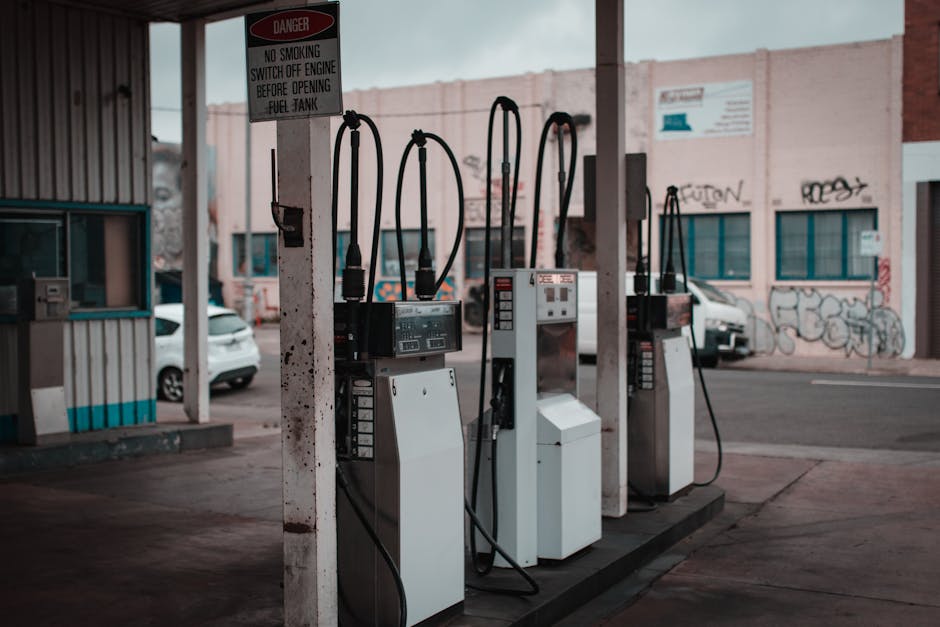
Gas station mystery shopping is where geography decides everything. The assignments themselves are mechanical: verify fuel grades, photograph the pump and price sign, check the restroom and lot condition, and upload a receipt. Standard gas station compliance checklists keep the on-site work quick and repeatable. The pay is usually modest per location, often in the mid-teens to low-twenties flat plus a small fuel reimbursement, and the visit is fast. The entire cost structure lives in the drive.
Two scenarios make the difference stark.
Clustered route, two stations at adjacent exits. Combined flat payout $40. Drive between stations 10 minutes, plus 30 minutes round trip from home, 15 minutes on-site per station, 25 minutes total reporting.
| Task | Time |
|---|---|
| Commute (home to first, last to home) | 30 min |
| Drive between stations | 10 min |
| On-site (two stations) | 30 min |
| Reporting | 25 min |
| Total | 95 min (1.58 hr) |
$40 ÷ 1.58, about $25.30 per hour. This is the version that works.
Isolated single station, 25 minutes away. Flat payout $18. Round-trip commute 50 minutes, on-site 12 minutes, report 20 minutes. Total 82 minutes (1.37 hr). $18 ÷ 1.37, about $13.15 per hour, before factoring fuel and vehicle wear.
Same job category, nearly half the hourly rate, entirely because of routing. Gas station shops are profitable only when chained into a route you were already driving, or when the scheduler bonuses the fee for last-minute fills. As standalone trips, they are usually a loss.
Retail Shops and the Minimum-Wage Floor
Retail mystery shopping earnings are the riskiest category for a structural reason: retail flat fees are the lowest in the industry, typically $8 to $15, which means overhead consumes a proportionally larger share of every payout. A 20-minute commute costs the same clock time whether the assignment pays $12 or $50, but it represents 3 percent of a $50 bank fee and nearly 17 percent of a $12 retail fee. The effective-rate collapse per minute of commute is steeper here than in any other category.
The crossover calculation makes this concrete. For a $10 retail shop to match a $15 local minimum wage, the total committed time must stay at or under 40 minutes ($10 ÷ $15 = 0.67 hours). A lean retail shop with no revisions runs roughly 40 minutes of fixed overhead before you start the car (10-minute briefing, 15-minute on-site visit, 15-minute checkbox report). That leaves zero commute budget. The shop starts at the floor and drops below it the moment you leave your neighborhood.
A $15 retail shop has more room. Its 60-minute time budget ($15 ÷ $15 = 1.0 hours) minus the same 40 minutes of fixed overhead leaves a 20-minute round-trip commute window. At typical urban speeds, that is roughly 6 miles each way. Beyond that radius, the assignment pays less per hour than the entry-level job inside the store you are auditing. The minimum wage comparison is not a theoretical benchmark. It is the floor these assignments sit on.
The practitioner takeaway: retail shops function as filler stops, not standalone trips. They earn their place inside a route already anchored by a higher-paying bank or gas station assignment, where the marginal commute approaches zero and the fee becomes near-pure upside. Scheduled alone, a retail shop asks you to subsidize the assignment with your own fuel and time, and in a $15-plus minimum-wage jurisdiction, it often pays less than the conventional job across the street.
Reimbursement-Only Jobs Are Not Pay
The most economically misleading structure in the industry is the reimbursement-only assignment. The "compensation" is a refund of a purchase you make yourself, whether a meal, a tank of gas, or a required product. Headline figures can look large, $60 for a restaurant visit for example, but the entire amount is reimbursement. Your net cash income is zero. A plain explanation of reimbursement versus flat fee pay is worth reading before you accept one.
Run the math on that restaurant shop. You commit roughly 90 minutes (commute, the meal, and a detailed report with photo uploads), and the $60 payout is 100 percent reimbursement. Effective hourly rate: $0. You traded an hour and a half of your time for the privilege of spending and recouping your own money, while the opportunity cost, the wage you could have earned at a real job during those 90 minutes, vanishes entirely.
This is not inherently a scam. Legitimate companies run reimbursement-heavy shops, and if you wanted the meal or the product anyway, the assignment effectively gives it to you at a discount. The trap is treating reimbursement as wages when it is simply your own money returning to you.
A useful filter: split every offer into two columns, cash fee and reimbursement. Compute your hourly rate using only the cash fee column. If that number is below what your time is worth, decline unless the reimbursement buys something you genuinely needed. Separately, distinguish legitimate reimbursement-only structures from outright fraud. The FTC mystery shopping scam warnings flag any scheme that asks you to deposit checks or wire money upfront, and no legitimate shop requires you to pay to participate.
Building a Route That Clears $25 an Hour
The shoppers who consistently clear $25 to $30 per verified hour are not the ones who accept everything. They run the equation on every offer and route aggressively, converting each decision into arithmetic. The operating discipline below separates break-even shoppers from profitable ones.
Cluster geographically. The single highest-leverage move is chaining assignments into a route so commute time is shared across multiple payouts. Practical route optimization strategies turn four corridor shops into one efficient trip. A route of four shops in a single commercial strip pushes your blended hourly rate meaningfully higher than the same shops done as standalone trips, because the drive is amortized across several payouts.
Decline on a formula, not a feeling. Set a floor. If your target is $25 an hour and a shop's total committed time is 90 minutes, the flat fee must clear $37.50 ($25 times 1.5 hours), or you pass. Reimbursement does not count toward the floor. This converts vague "is it worth the time" judgments into arithmetic you can apply in ten seconds when an offer lands.
Target fee-bonused and last-minute shops. Schedulers bonus fees when deadlines approach and shops go unfilled. The same gas station that paid $15 on Monday may pay $30 on Friday afternoon. Building flexibility into your week lets you capture these uplifts without disrupting a route.
Log mileage as an hourly-rate multiplier, not just a tax footnote. Consider a 30-mile round trip at the current IRS standard mileage rate, roughly 70 cents per mile. That generates about $21 in deductible expenses. At a 22 percent marginal bracket, the tax savings come to roughly $4.60, which lifts a $50, two-hour route from $25 to about $27.30 per verified hour. The deduction only materializes if you log every mile consistently, so a reliable contractor record-keeping checklist and clear guidance on mileage and tax deductions function as hourly-rate tools, not year-end paperwork.
Vet companies as a time-cost filter. A fraudulent shop does not merely cost you the payout. It consumes the entire time block you reserved for it, plus the overhead of chasing money you will never receive. Treat company verification as hourly-rate protection. Stick with firms listed through or vetted by the industry body, the Mystery Shopping Professionals Association, and apply the FTC scam warnings covered earlier as a hard filter before you block out your calendar.
The short version
Mystery shopping pay, calculated honestly, rewards route discipline over volume. The shoppers who consistently clear $25 to $30 per verified hour treat every assignment as a small business decision: total time in the denominator, cash fee in the numerator, reimbursement excluded from the wage, and routes clustered until the commute disappears into the payout. Run that math on the next offer before you accept it, and the headline figures stop fooling you.
Stay in the loop.
Get the latest posts and exclusive content delivered to your inbox.
Join 13 readers. No spam. Unsubscribe in one click, anytime.
About the author
Marcus Reed
Staff Writer
Marcus writes about side hustles and extra income, from gig apps and freelancing to online business and investing, drawing on public data, platform reports, and reputable sources.
Related Posts
$60 Gas Station Mystery Shopping Pays Single Digits Per Hour
A $60 gas station mystery shopping payout sounds great until you factor in commute and reporting. See the true hourly rate before you commit.

Robotaxi Impact on Gig Driver Pay, 5 Signals and a Hedge
The robotaxi impact on gig driver pay lands metro by metro. Track the 5 trip-log signals monthly, then hedge rideshare income in staged moves.

How Uber Calculates Driver Pay, and How to Audit It
How Uber calculates driver pay now runs through upfront pricing and batch matching. Learn the system on Uber and Lyft, then audit 14 days of trips.