Whatnot Fees Shrink a $20 Sale to $14.58
Whatnot fees shrink a $20 sale to $14.58 net cash once shipping, packaging, prep time, and unsold inventory costs are factored into your true hourly rate.

Whatnot fees look simple on paper. An 8% platform commission plus a 2.9% payment processing fee adds up to roughly 10.9%, and most guides leave it there. But that figure only describes what Whatnot takes off the top of each transaction. It says nothing about what shipping subsidies, packaging materials, dead time between streams, and unsold inventory quietly pull out of your bank account. When you trace a $20 sale from the winning bid all the way to deposited cash, the erosion is steeper than the fee schedule suggests, and the number that actually matters is your fully loaded hourly rate.
Stay in the loop.
Get the latest posts and exclusive content delivered to your inbox.
Join 13 readers. No spam. Unsubscribe in one click, anytime.
The Whatnot selling experience rewards sellers who understand their complete unit economics, not just the visible fee line. This guide breaks down every deduction layer by layer, walks through a worked example with real numbers, and gives you a repeatable framework to calculate your true hourly rate so you can decide whether live selling is genuinely worth your time.
The Visible Whatnot Fees on Every Transaction
If you are asking how much it costs to sell on Whatnot, the headline answer is straightforward. Every transaction carries two automatic deductions. The first is an 8% platform commission charged on the final sale price. The second is a payment processing fee of 2.9% plus $0.30 per transaction, routed through Stripe. Together, these create a visible fee burden of approximately 10.9% plus a flat thirty cents on every sale.
Whatnot's official seller fees page documents this structure. For the calculations in this guide, both fees are applied to the item price, which matches how the deductions appear in most seller payouts.
On a $20 item with buyer-paid shipping, the baseline math looks like this:
| Deduction | Amount | Remaining |
|---|---|---|
| Gross sale | $20.00 | |
| 8% platform fee | -$1.60 | $18.40 |
| 2.9% + $0.30 processing | -$0.88 | $17.52 |
After the platform takes its cut, you are left with $17.52 from a $20 sale. That is the number most sellers stop at when they calculate their Whatnot profit margin. It is also where the real cost story begins.
Tracing a $20 Sale Down to $14.58
The $17.52 figure assumes shipping is fully covered by the buyer and that packaging is free. Neither assumption holds up in practice for most sellers who want to stay competitive on a live selling platform.
Competitive Whatnot sellers frequently offer discounted or free shipping to win bids and keep buyers coming back. When you absorb even a portion of the shipping label cost, that subsidy comes directly out of your margin. Whatnot's domestic shipping prices vary by package size and weight, but sellers who offer shipping promotions routinely absorb $2 to $3 per order.
Packaging materials add another layer. Industry data on ecommerce packaging costs indicates that small businesses typically spend between $0.50 and $1.50 per order on mailers, tape, labels, and protective filler. That range reflects multi-item orders with boxes, bubble wrap, and branded inserts. A typical single-item Whatnot sale ships in a lightweight poly mailer purchased in bulk, which can push the realistic per-order packaging cost below that floor, to roughly $0.44 for a poly mailer, packing tape, and label stock.
The full erosion on that $20 sale looks like this:
| Line Item | Deduction | Running Total |
|---|---|---|
| Gross sale | $20.00 | |
| 8% platform fee | -$1.60 | $18.40 |
| Payment processing (2.9% + $0.30) | -$0.88 | $17.52 |
| Shipping subsidy | -$2.50 | $15.02 |
| Packaging and label stock | -$0.44 | $14.58 |
That $14.58 is your net cash before accounting for the cost of the item itself. If you sourced that item for $5 at a thrift store or wholesale lot, your actual profit is $9.58. If you paid $8, your profit drops to $6.58.
The fee burden that looked like 10.9% has effectively become 27.1% once shipping and packaging enter the picture. That is the number that determines whether selling on Whatnot is worth it, and it is the number almost no guide bothers to calculate.
The Hidden Cost of Shipping and Promotions
Shipping on Whatnot operates on a simple principle: the buyer pays the freight unless you choose to subsidize it. But the platform's culture of giveaways, bargain starting prices, and free shipping deals creates real pressure to absorb costs that never appear in the official fee schedule.
Offering free or discounted shipping is one of the most effective tactics for winning competitive bids and keeping buyers locked in during fast-paced auctions. The problem is that every dollar of shipping you absorb comes straight from your margin, and it is remarkably easy to lose track of across dozens of sales in a single stream.
A Sidehusl review of Whatnot captures this tension directly. Sellers who start auctions at bargain prices can move a high volume of merchandise but walk away with almost no profit if items sell at the opening bid rather than getting driven up by competitive bidding. Giveaways compound the problem because the seller covers both the product cost and the shipping on every free item.
Price promotions into your items from the start instead of absorbing them reactively. If you know you will absorb $2.50 in shipping on a $20 sale, your effective floor price needs to account for that subsidy, not just the raw fee percentage. Start your auctions at a price that still leaves margin after every hidden cost, not at $1 hoping for a bidding war that may never materialize.
Calculating Your True Whatnot Hourly Rate
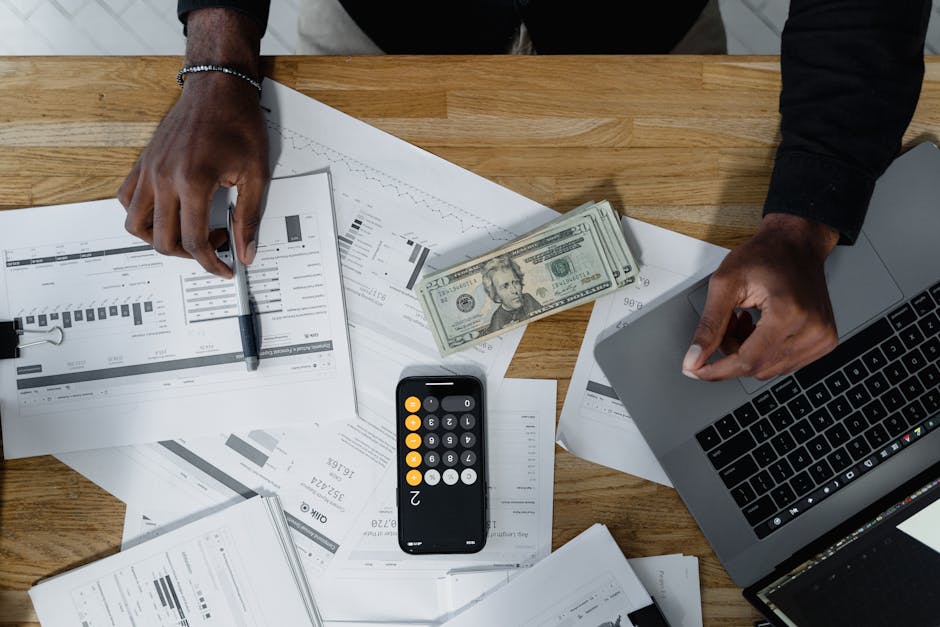
The $14.58 net cash figure is a per-unit number. To understand whether a stream was actually profitable, you need to convert it into an hourly rate by accounting for every minute the stream cost you, not just the time you spent on camera.
Live selling involves significant labor that never appears in the sales log. Here is what a typical two-hour stream actually demands:
| Activity | Time |
|---|---|
| Sourcing and sorting inventory | 90 min |
| Pricing, testing, and photographing items | 45 min |
| Stream setup (lighting, phone mount, scheduling) | 30 min |
| Live show | 120 min |
| Post-stream packing and label printing | 60 min |
| Buyer communication and dispute handling | 15 min |
| Total invested time | 360 min (6 hours) |
Apply this to a realistic stream outcome. Say you sell 20 items at an average of $20 each during that two-hour show.
- Gross revenue: $400
- Net cash after fees, shipping, and packaging: $291.60 ($14.58 per item × 20)
- Cost of goods sold (20 items at $5 average): $100
- Net profit: $191.60
Divide that profit by six hours of total invested time and your true hourly rate is $31.93. That is a solid side hustle wage, but it is nowhere near the $200 per hour you might calculate if you only counted the two hours you were live on camera.
For broader context, research on the real gig worker hourly rate shows that headline earnings consistently overstate actual take-home pay by a significant margin across platforms. Whatnot is no exception. The gap between perceived and actual earnings is where most new sellers burn out.
This number also assumes every item you sourced actually sold. When unsold inventory enters the calculation, the math gets worse.
The Unsold Inventory Carrying Cost
The $31.93 hourly rate from the previous section rests on one fragile assumption: that every item you sourced actually sold. In reality, most Whatnot streams leave unsold inventory on the table, and those leftover items carry a hidden cost that drags your hourly rate down further.
When you source inventory for a stream, you pay for every item up front. The ones that sell generate revenue. The ones that do not sell sit in a storage bin, tying up cash you could deploy elsewhere. Accountants call this carrying cost, and it includes storage space, the opportunity cost of locked-up capital, and the risk that items lose value or become unsellable. The standard approach to inventory carrying costs defines this as a percentage of total inventory value, typically 20% to 30% annually for small businesses. For a Whatnot seller, that means every $100 of unsold stock quietly costs an additional $20 to $30 per year just sitting on a shelf.
Now trace how unsold inventory changes the stream math, one step at a time.
Step 1: Count what you actually sold. Say you sourced 30 items for your stream but only sold 20 of them during the show. Those 10 unsold items still cost you $5 each, which means $50 of capital is locked in inventory that may or may not sell in a future stream.
Step 2: Recalculate your true per-item cost. You spent $150 total on 30 items, not $100 on just the 20 that sold. Spread that $150 across the 20 items that actually generated revenue, and your true cost per sold item rises from $5 to $7.50.
Step 3: Recalculate profit. With the corrected cost of goods, the stream numbers change:
- Net cash after fees, shipping, and packaging: $291.60
- Adjusted cost of goods (30 items at $5 each): $150
- Net profit: $141.60
Step 4: Recalculate your hourly rate. Divide $141.60 by the same six hours of total invested time, and your true hourly rate is $23.60.
That single adjustment dropped your hourly rate from $31.93 to $23.60, a 26% reduction. And it still assumes the remaining 10 items eventually sell at full margin in a future stream, which is far from guaranteed on a platform where most items go for the starting bid.
Strategies to Protect Your Live Selling Margins

Every tactic below maps back to the numbers established earlier: the 27.1% fully loaded cost per sale on a $20 item, the $14.58 net cash that remains, and the $23.60 true hourly rate at roughly 67% sell-through.
Set Your Auction Floor With Real Break-Even Math
Your break-even price is not your sourcing cost divided by a flat percentage. The 8% platform fee and the 2.9% processing percentage scale with sale price, but three costs are flat on every transaction regardless of what the item sells for: the $0.30 processing surcharge, the $2.50 shipping subsidy, and the $0.44 in packaging. The correct formula accounts for both layers:
Break-even price = (sourcing cost + $3.24) / 0.891
The $3.24 is the sum of those three flat per-sale costs. The 0.891 is what remains after the percentage-based fees take their cut. For a $5 sourced item, the break-even price is ($5 + $3.24) / 0.891, or about $9.25. A $10 item needs roughly $14.86. The old shortcut of dividing cost by 0.729 only works at the $20 price point because it treats those flat costs as if they scale proportionally. They do not. Sellers who start auctions at $1 and hope for a bidding war are mathematically starting below break-even on every item that does not get bid up past that floor.
Run the Giveaway Math Before Each Stream
A $5 giveaway item that you also ship costs you $5 for the product plus roughly $2.50 in shipping plus $0.44 in packaging, totaling close to $8. That giveaway only pays for itself if it generates at least $8 in additional bidding across the rest of the stream. Track your average order value with and without giveaways over several sessions. If the uplift does not consistently clear that $8 threshold, raise the trigger or cut the giveaway.
Match Your Stream Cadence to Your Overhead
The six-hour investment per stream is largely fixed regardless of how many items sell. If you run a weekly stream moving 20 items, that overhead breaks down to 18 minutes of labor per item. Switching to biweekly with the same item count keeps the per-item labor steady but doubles how long inventory sits between shows, pushing carrying costs higher and risking that trend-driven items lose their selling window before the next stream.
Model Sell-Through Sensitivity Before You Source
Sell-through rate is the single biggest lever on your true hourly rate, and small shifts produce outsized effects. The $23.60 hourly rate assumes you sold 20 of the 30 items you sourced, roughly 67% sell-through. Here is what happens when that rate moves:
| Sell-Through Rate | Items Sold | Net Cash | Net Profit | Hourly Rate |
|---|---|---|---|---|
| 67% (20 of 30) | 20 | $291.60 | $141.60 | $23.60 |
| 60% (18 of 30) | 18 | $262.44 | $112.44 | $18.74 |
| 50% (15 of 30) | 15 | $218.70 | $68.70 | $11.45 |
Dropping from 67% to 50% sell-through cuts your hourly rate in half. This is why Whatnot's follower notification system matters so much: every follower who enables notifications increases the probability that sourced inventory actually sells rather than sitting on a shelf. Established live selling best practices confirm that repeat viewers drive both higher final prices and better conversion than first-time browsers, which directly protects the sell-through percentage your hourly rate depends on.
The Bottom Line on Whatnot Profitability
Selling on Whatnot can absolutely generate real income. The live auction format creates genuine urgency and impulse-buying behavior that static marketplaces like eBay cannot match. But the gap between gross revenue and take-home profit is far wider than the fee schedule alone suggests.
A viable Whatnot business depends on three variables working in your favor: low sourcing costs, high sell-through rates, and honest accounting of the six hours of total labor behind every two-hour show. The danger is assuming the visible deductions tell the whole story while shipping promotions, unsold inventory, and dead prep time quietly drain the margins.
Run the full calculation on your own streams. Track your actual prep time, your real sell-through rate, and your per-item packaging costs across a full month. The sellers who sustain a profit are the ones who know their true hourly rate before they source, not after the stream ends.
Stay in the loop.
Get the latest posts and exclusive content delivered to your inbox.
Join 13 readers. No spam. Unsubscribe in one click, anytime.
About the author
Ryan Callahan
Staff Writer
Ryan reports on extra-income opportunities and personal finance, including side hustles, money-making apps, and investing basics, with a focus on clear, practical analysis.
Related Posts

What the Amazon Influencer Program Really Pays per Video
A reported $25,000 to $30,000 Amazon Influencer Program month sounds life-changing. We price the 500-video ramp behind it and compute the real hourly rate.

Best Print on Demand Marketplaces Ranked by $25 Take-Home
Best print on demand marketplaces ranked by real take-home on one $25 order, with fees, forced ads, and traffic compared across Etsy, Amazon, Redbubble.

Walmart Return Pallets Ranked by Real Take-Home Per Hour
Walmart return pallets pitch manifest retail value. We trace one pallet through unsellable items, fees, and unpaid hours to the real hourly rate.