$60 Gas Station Mystery Shopping Pays Single Digits Per Hour
A $60 gas station mystery shopping payout sounds great until you factor in commute and reporting. See the true hourly rate before you commit.
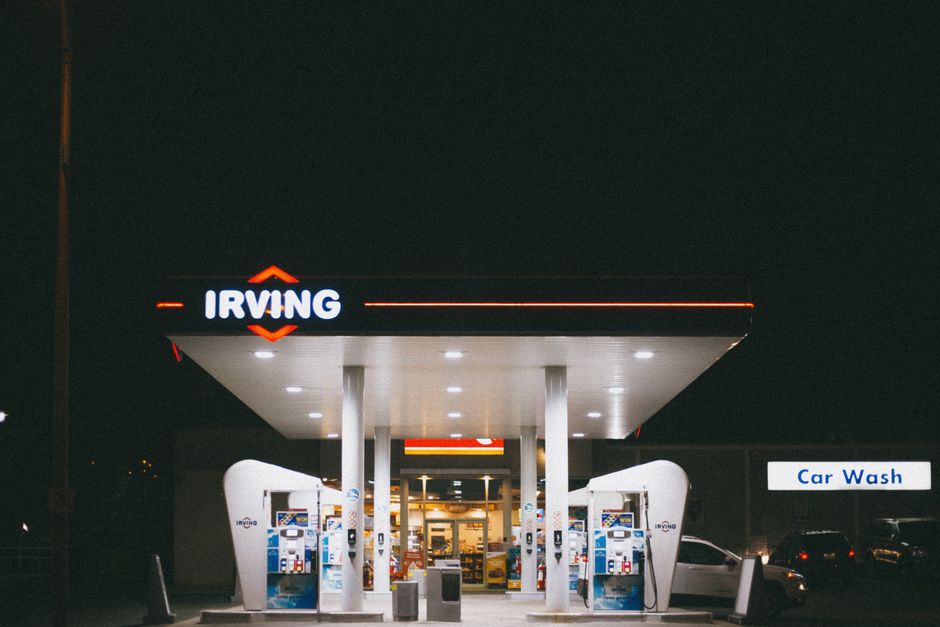
A $60 gas station mystery shopping assignment looks like easy money. Fill up, walk inside, note a few details, collect sixty bucks. The gig listings advertise it exactly that way: a lump sum, no mention of the hours that come with it. Once you decompose that payout into the actual time and expenses it requires, the rate lands closer to minimum wage, and sometimes below it.
Stay in the loop.
Get the latest posts and exclusive content delivered to your inbox.
Join 13 readers. No spam. Unsubscribe in one click, anytime.
The core problem is simple. The $60 figure is gross revenue, not net hourly income, and the gap between those two numbers is where every new shopper loses money without realizing it.
Why the $60 Gas Station Shop Looks Irresistible
Gas station mystery shopping appeals for obvious reasons. The work sounds simple, the locations are everywhere, and the advertised payouts dwarf the $5 to $10 fee that standard gas station assignments typically offer. When a platform posts a $60 gas station assignment, it usually means one of two things: the shop has been passed over by other shoppers and the platform has added a bonus to fill it, or the assignment involves a compliance audit with a heavier reporting load than a typical convenience store visit.
Either way, the headline number does the heavy lifting. Shoppers see $60 and mentally divide by what they assume is thirty minutes of work, arriving at an implied $120 hourly rate. That math fails before you start your car.
The first thing to understand is how platforms present compensation. A posted payout often bundles a fee (money you keep) with a reimbursement (money you spend on required purchases and get back). A $60 gas station shop might include a $30 fee and a $30 reimbursement for fuel you must buy on-site. The reimbursement covers a cost you would not otherwise have, so it is not income in any meaningful sense. Your actual pay for the labor is $30, and that is before you account for the commute. Companies like BestMark explain reimbursement versus payment distinctions that shoppers routinely overlook.
There is also a scam dimension to watch for. Legitimate platforms never ask you to pay upfront fees or deposit checks. The FTC publishes mystery shopping scam warnings worth reading before you sign up anywhere, because fake "$60 gas station shop" listings circulate on job boards and social media regularly.
Gas station mystery shopping is a real gig on legitimate platforms, and the shops pay what they promise. The advertised number is structured to maximize appeal, though, not to communicate your effective wage.
Where the Time Actually Goes
Decomposing a gas station mystery shop reveals four distinct phases, and only one of them happens at the station itself.
Briefing and Preparation
Compliance-heavy gas station shops come with detailed instructions. You need to read the brief, memorize the required scenario (what to buy, what to ask, which restroom to inspect), note timing requirements, and understand the photo specifications. Gas station compliance audits involve specific checkpoints that vary by client and can include pump interactions, signage verification, and safety equipment checks. First-time shoppers often need 15 to 25 minutes to prepare. Experienced shoppers who have done the same chain before can cut that to roughly 10 minutes.
Commute
This is the cost that platforms pretend does not exist. A gas station shop is not remote work. You drive to the location, and that time belongs to the gig, not to your personal life. A 15-mile drive each way is 30 miles round trip, and at mixed urban and highway speeds, that is roughly 40 to 50 minutes behind the wheel. Forum discussions about platform-specific gas station briefs suggest that shoppers regularly accept assignments 15 to 25 miles from home, because the bonus that pushed the payout to $60 also attracted them from a wider radius.
On-Site Evaluation
The shop itself involves fueling, entering the store, interacting with the cashier, checking the restroom, and sometimes purchasing a specific item. Gas station evaluation checklists can be extensive, covering cleanliness, greeting protocols, upsell compliance, and facility condition. A thorough visit takes 20 to 30 minutes. Rush it and you miss details that will get your report rejected, which means no pay at all.
Narrative Report
This is the phase that surprises new shoppers. Compliance gas station shops require a narrative write-up for nearly every checkpoint. The work involves writing sentences describing what you observed, at what time, in what condition, and how the employee responded, not just checking boxes. Guidance on writing mystery shopping reports makes clear that the narrative must be specific, objective, and free of opinion. For a gas station compliance shop with 15 to 20 checkpoints, a careful first-time report can take 35 to 50 minutes. Experienced shoppers who reuse templates often compress this to 25 minutes, but the writing does not disappear.
Total Time Per Shop
The table includes an admin and submission phase: uploading required photos, submitting the completed report through the platform, and confirming receipt. First-time shoppers often spend 10 minutes here; experienced shoppers need about 5.
| Phase | First-Time Shopper | Experienced Shopper |
|---|---|---|
| Briefing | 20 min | 10 min |
| Commute (30 mi round trip) | 45 min | 45 min |
| On-site evaluation | 25 min | 20 min |
| Narrative report | 45 min | 25 min |
| Admin and submission | 10 min | 5 min |
| Total | 145 min | 105 min |
A first-time shopper invests roughly two and a half hours. An experienced shopper, doing everything efficiently, still needs about an hour and forty-five minutes. Neither figure appears in the gig listing.
The Hidden Costs of Gas Station Mystery Shopping
Money leaves your pocket before you see the fee. Three financial drains operate on every assignment.
The Reimbursement Trap
You pay for fuel twice on a gas station shop. The reimbursement covers the on-site purchase, not the fuel you burned driving there. You arrive having already spent $4 to $6 on commute gas, then buy $10 to $30 of fuel on-site as required, and only the latter comes back. Worse, some shops cap reimbursements below the purchase amount: buy $10 of gas, get $8 back. Or the shop demands a $7 snack with a $5 cap. The hidden commute costs of gig work compound when each assignment carries its own unreimbursed expense, and gas station shops carry more than most.
Vehicle Costs
The IRS standard mileage rate (67 cents per mile in 2024) captures full operating cost: fuel, maintenance, depreciation, insurance, and registration. Thirty round-trip miles at that rate costs $20.10, which cuts your $30 fee to under $10 in net income. Count only direct fuel expense (roughly $3.50 per gallon, 25 mpg) and you still spend $4.20 on commute gas. The IRS also defines independent contractors to include mystery shoppers, so you can deduct mileage. But a deduction reduces taxable income, not the cost itself. At a 22 percent marginal rate, deducting $20.10 saves about $4.42. You still spent $15.68 net.
Opportunity Cost
Opportunity cost is what your time earns elsewhere. An $18-per-hour delivery shift is the obvious benchmark. A single shop at a $5 effective hourly rate means $45 in foregone earnings over two and a half hours. Stack five shops into a route, though, and the effective rate climbs to $22 per hour, beating that delivery alternative by $4 per hour. The crossover sits around three shops per route. Below that threshold, delivery wins. Above it, mystery shopping wins, provided the shops are geographically tight enough to keep drive time minimal.
The Real Hourly Rate
Now the math. Take a realistic scenario and run the numbers.
Assumptions for a typical $60 gas station compliance shop:
- Total payout: $60
- Fee portion: $30 (the reimbursement covers a required fuel purchase)
- Commute: 30 miles round trip
- Time: 145 minutes (first-time) or 105 minutes (experienced)
- Vehicle cost at IRS rate: $20.10
- Vehicle cost, fuel only: $4.20
| Scenario | Gross Fee | Vehicle Cost (IRS) | Net Income | Time | Hourly Rate |
|---|---|---|---|---|---|
| First-time, full vehicle cost | $30 | $20.10 | $9.90 | 2.42 hrs | $4.09 |
| First-time, fuel only | $30 | $4.20 | $25.80 | 2.42 hrs | $10.66 |
| Experienced, full vehicle cost | $30 | $20.10 | $9.90 | 1.75 hrs | $5.66 |
| Experienced, fuel only | $30 | $4.20 | $25.80 | 1.75 hrs | $14.74 |
Using the IRS rate, which captures what your car actually costs to operate, the hourly rate lands between $4 and $6. Using fuel-only cost, it ranges from about $11 to $15. The truth falls somewhere in between, because depreciation and maintenance are real even when the bill is not due this week.
Now consider the scenario where the full $60 is fee, no reimbursement. That happens with bonused shops where the platform has raised the payout to fill a last-minute slot. Even then:
| Scenario | Gross Fee | Vehicle Cost (IRS) | Net Income | Time | Hourly Rate |
|---|---|---|---|---|---|
| First-time, $60 all fee | $60 | $20.10 | $39.90 | 2.42 hrs | $16.49 |
| Experienced, $60 all fee | $60 | $20.10 | $39.90 | 1.75 hrs | $22.80 |
These are the numbers that make the gig look respectable. But the $60-all-fee shop is the exception, not the rule. Most $60 gas station postings bundle a reimbursement, and most shoppers are doing the shop for the first or second time, not at peak efficiency.
The honest takeaway: a typical $60 gas station mystery shopping assignment yields a net hourly rate in the high single digits to low double digits, and it drops below minimum wage if you use full vehicle costing and are slow at reporting. The advertised rate implies $120 per hour if you assume thirty minutes of work. The real number is closer to one-tenth of that.
When Gas Station Mystery Shopping Actually Pays
Single-shop economics are grim. Route economics change the picture entirely.
The Mystery Shopping Professionals Association publishes standards that govern how shops are assigned and compensated. Within that framework, experienced shoppers typically build routes of 5 to 10 assignments in a single outing. The reason is simple arithmetic. If you drive 30 miles for one shop, the commute cost is $20.10 and the commute time is 45 minutes. If you drive the same 30 miles and complete five shops along the way, the commute cost per shop drops to $4.02 and the commute time per shop drops to 9 minutes.
Guidance on planning mystery shopping routes from Ipsos, one of the largest platforms, emphasizes clustering assignments geographically and scheduling them in a sequence that minimizes backtracking. The principle applies to any platform.
Route density changes the math:
| Shops Per Route | Commute Cost Per Shop | Commute Time Per Shop | Effective Hourly (Experienced) |
|---|---|---|---|
| 1 | $20.10 | 45 min | $5.66 |
| 3 | $6.70 | 15 min | $18.64 |
| 5 | $4.02 | 9 min | $22.59 |
| 8 | $2.51 | 6 min | $24.99 |
At five shops per route, the effective hourly rate crosses $22. At eight, it approaches $25. Those numbers assume the experienced-shopper time profile (10 min briefing, 20 min on-site, 25 min report, 5 min admin per shop) and the $30 fee per shop after reimbursement. They also assume the shops are geographically clustered, which is the hard part.
Gas station mystery shopping works as a route strategy, not a standalone gig. It pays off only when you have enough volume in a tight geographic area to amortize the commute. A shopper with one or two shops per week scattered across a metro area will lose money relative to almost any other side hustle. A shopper with a standing route of eight gas station audits every two weeks can push the effective hourly rate above $24 after vehicle costs, as the table shows.
Route-based shopping, a common practice in the mystery shopping field, is how platforms fill geographically dispersed assignments. Platforms bonus individual shops precisely because a single assignment is not worth the drive. The bonus reflects the market acknowledging that one shop at $60 is still barely break-even, and the platform needs a shopper who is already in the area.
How to Evaluate Any Gas Station Shop Offer
Filter any gas station mystery shopping assignment through criteria specific to this work.
1. Classify the shop type. A brief asking you to buy gas, check the restroom, and note the cashier's greeting is a convenience store check taking 30 to 45 minutes on-site. A brief requiring pump display photos, timing of multiple transactions, and a detailed narrative per checkpoint is a compliance audit taking 90 minutes or more. If the platform does not distinguish between the two, assume the heavier load.
2. Gauge route density. Check how many gas station chains your platforms list within a 15-mile radius. Three or more shops along a single corridor means the route is viable. A lone $60 shop means the commute is a sunk cost. Route density, not the headline fee, determines whether gas station mystery shopping pays.
3. Know when to negotiate a bonus. Schedulers bonus gas station shops in predictable situations: last-minute postings, remote locations, and shops requiring specific fuel grades or restroom inspections. If a shop sits unfilled for 48 hours, a polite request for a $10 to $15 bonus succeeds more often than new shoppers expect.
4. Read the brief for red flags. Fifteen or more checkpoints, pump display photos, and timing requirements for multiple transactions signal a two-hour commitment. If the brief requires multiple fuel grades or photos of every pump, the narrative alone consumes 45 minutes. Walk away unless the fee clears $40 after vehicle cost.
5. Compare to your next-best option. If you could earn $18 per hour delivering food during the same window, a two-hour mystery shop needs to net more than $36. A $30 fee minus $20 in vehicle costs does not clear that bar. Shoppers who profit treat each assignment as a route unit, negotiate bonuses on remote locations, and decline anything below their hourly floor.
The $60 gas station shop is piece-rate contract work with a deliberately attractive sticker price. Run the numbers before you start the car.
Stay in the loop.
Get the latest posts and exclusive content delivered to your inbox.
Join 13 readers. No spam. Unsubscribe in one click, anytime.
About the author
Hannah Cole
Senior Editor
Hannah writes practical guides on building income outside a day job, from selling online to beginner investing, with a focus on clear explanations and real benchmarks.
Related Posts

Mystery Shopping Pay Versus the Real Hourly Rate
Mystery shopping pay hides unpaid hours. We break down real hourly rates for bank, gas station, and retail shops to show which assignments actually pay.

Robotaxi Impact on Gig Driver Pay, 5 Signals and a Hedge
The robotaxi impact on gig driver pay lands metro by metro. Track the 5 trip-log signals monthly, then hedge rideshare income in staged moves.

How Uber Calculates Driver Pay, and How to Audit It
How Uber calculates driver pay now runs through upfront pricing and batch matching. Learn the system on Uber and Lyft, then audit 14 days of trips.