What a Brokerage Transfer Bonus Pays per Hour
Brokerage transfer bonuses promise free money. Price the ACAT fees, tax basis, and lost yield first to see when the reward beats your hourly rate.

The deal posts make it look effortless. Move $250,000, collect 112,500 points worth $1,125, then keep earning rewards on the balance every year. If you built a five- or six-figure brokerage account out of gig and freelance income, that reads like the best hourly rate you will ever see. It usually is not. A brokerage transfer bonus looks like free money precisely because almost nobody prices the parts that are not free: the outbound transfer fee, the week your positions sit frozen, the fractional shares that cannot move without creating a tax bill, the points that can lose value before you redeem them, and the yield your money would have earned wherever it already sits.
Stay in the loop.
Get the latest posts and exclusive content delivered to your inbox.
Join 20 readers. No spam. Unsubscribe in one click, anytime.
Add those up and most offers shrink from windfall to modest discount. That is the frame this piece runs, and it works on every offer you will ever see, points-on-balance programs included. A transfer bonus is a discount on a move you were already making, never a reason to make the move. Everything below is the math that shows when that holds.
What These Programs Actually Pay
Three distinct products get lumped together in deal posts, and they behave very differently in hourly math.
| Program type | What you get | Typical size | The catch that matters |
|---|---|---|---|
| ACAT transfer bonus | One-time cash or points on assets moved in | Roughly $50 to a few thousand dollars, scaling with the amount moved | Assets often must stay put about a year or the bonus is clawed back |
| Points on portfolio balance | Recurring rewards on assets under management | A fraction of a percent per year, usually minus an annual fee | Earning rates and redemption values can change on short notice |
| Cash and IRA bonuses | One-time reward on new deposits | Tens to a few hundred dollars | Smaller rewards, similar holding-period strings |
The first row is the classic play. Broker transfer bonus offers at major brokers currently on the market commonly run from about $50 at the small end to a few thousand dollars at seven figures, scale with the amount transferred, and typically require assets to stay roughly twelve months, with early withdrawals triggering a clawback.
The second row is the newer twist. Silo Markets, the brokerage rewards program behind the current wave of posts, pays 0.5 points per dollar of portfolio balance per year (worth about 0.5% in cash) against an annual fee running $95 to $960 by tier, per its published rewards plan terms. The 112,500 points on a $250,000 move cited above is its tiered Platinum schedule, capped at 300,000 points, or $3,000, for transfers initiated by September 30, 2026. The economics swing hard with balance: points only clear the annual fee above roughly $19,000 at the entry tier and $192,000 at Platinum, and third-party break-even math puts Gold as the best plan between about $79,000 and $344,000. Slot any offer into one of these three rows before doing anything else.
The Break-Even Formula for Any Brokerage Transfer Bonus
Every offer reduces to one number.
Effective hourly rate =
  (Reward × realistic redemption value × (1 − your marginal tax rate)
   − outbound ACAT fee, net of any reimbursement
   − friction cost (hours at your rate, exposure gap, follow-up calls)
   − devaluation haircut if the reward is points
   − yield given up during and after the move)
  ÷ your real hours spent
Then compare that rate to your hurdle. If you clear $40 an hour freelancing or driving deliveries, the bonus must beat $40 after every subtraction, not before.
The worked example deal posts never run
Take a $50,000 transfer, a $500 bonus, a $75 outbound fee, and about two hours of paperwork. Gross, that is (500 − 75) ÷ 2, roughly $212 an hour. This is the number that sells the deal. Now subtract honestly.
- Broker bonuses are often reported as taxable income, so a 24% bracket drops the reward to $380 and the rate to about $152 an hour.
- Paid in points you redeem later? Apply a haircut for caps and devaluation risk. At 90% redemption value, the rate falls to about $134 an hour.
- Still strong. The point of the formula is that each line is where the deal post goes quiet, and the next three sections are the lines that bite hardest.
The inputs to pull from the offer page
Gather all of this before touching a transfer form.
- Reward schedule, cap, deadline, payout timing, cash versus points
- Holding period and the exact clawback trigger
- Redemption rules, cash value per point, monthly caps, expiry
- Whether the offer reimburses the outbound ACAT fee
- Asset eligibility, fractional shares and proprietary funds included
- The new broker's sweep rate on idle cash
Transfer Friction and the ACAT Freeze
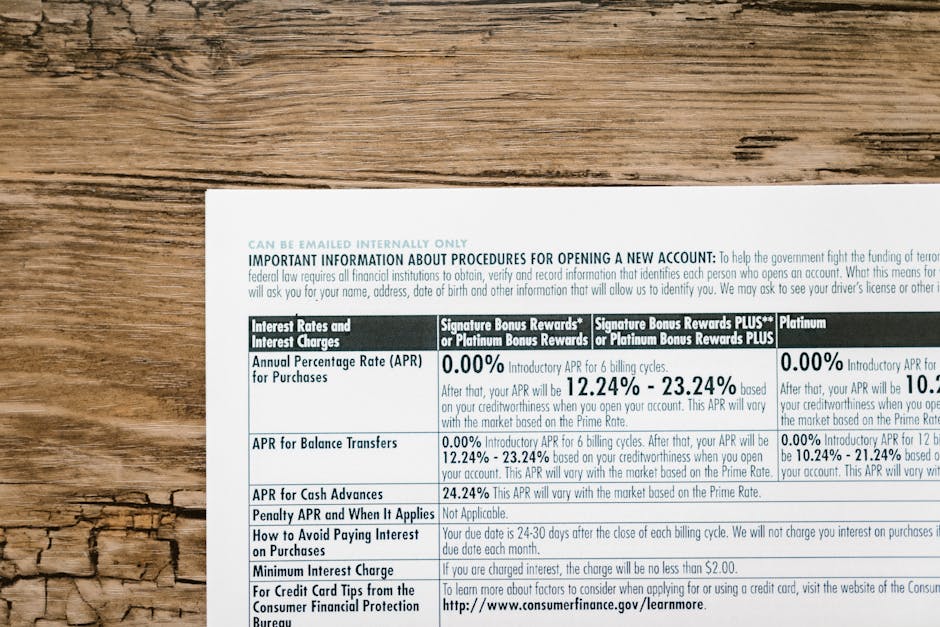
How long does an ACAT transfer take? FINRA's account transfer guidance describes the standard timeline as roughly five to seven business days once the delivering broker validates the request, and rejects can stretch it longer. While the transfer processes, your positions are generally frozen at the delivering broker. You cannot sell, rebalance, or exit, a constraint the SEC transfer bulletin walks through in detail.
Price three friction costs:
- The freeze. An in-kind transfer keeps your market exposure, shares move as shares, but you cannot act on them during the processing window. If a rebalance or exit was imminent, that is a real cost.
- Residuals and rejects. Partial transfers let you move some assets and keep the rest, which sounds tidy until leftovers and a second round of paperwork stretch two hours into four.
- The outbound fee. Most major brokers charge for a full outbound transfer, commonly $50 to $100, and published ACAT fee schedules make checking yours a two-minute job. Many offers credit it back, but usually only if you submit the receipt.
Count hours honestly. Initiation, tracking, fee reimbursement, and reconciliation realistically total two to three hours spread across a few weeks.
The Tax Trap of Selling to Move
The question of selling stocks to switch brokers tax consequences has a clean answer and a messy edge. The clean answer first. Eligible securities transfer in-kind through ACAT with no sale, no realized gain, and your cost basis carries over to the receiving broker, which IRS Publication 551 covers in detail. Done right, the move is tax-free.
The messy edge is where bonuses die. ACATS asset eligibility rules do not accommodate fractional shares, and many proprietary funds are non-transferable as well. Anything ineligible must be liquidated first, and liquidation is a sale.
A $120,000 portfolio carrying $40,000 of long-term gains, forced to sell because of fractional shares and one non-transferable fund, owes about $6,000 at the 15% long-term rate most earners pay. A $1,200 bonus does not cover it. The move costs roughly $5,100 net, plus a year of lockup, for the privilege.
One more tax line belongs in the formula. A brokerage account bonus is often reported as taxable income on a 1099, and a thorough bank bonus tax guide treats broker rewards the same way. The after-tax reward is the only reward that counts.
Opportunity Cost and the Risk-Free Baseline

The opportunity cost of moving investments is not zero. It is the risk-free rate, and daily Treasury bill rates put that baseline one click away. A reward on money you would hold anyway has to beat that yield plus your time, or it is a pay cut.
The quietest leak in these moves is the cash sweep interest rate at the new broker. Sweep rates vary widely between firms, and a broker's own disclosure page, like this brokerage sweep rate example, shows what your idle cash would actually earn. If the new broker sweeps idle cash two full points below your current setup, a $250,000 cash balance loses $5,000 a year, roughly four times the one-time $1,125 bonus on that same move. Points-on-balance programs are really a yield bump sold as a reward, Silo's 0.5% minus its fee, and deserve the same benchmark, the cash sweep rate versus Treasury bills held anywhere.
Clawbacks, Point Devaluation, and Terms That Change
Conservative inputs for the formula, learned the hard way:
- Holding periods are real. A broker bonus clawback holding period of about twelve months is standard, and dipping below the minimum can reverse the reward. Price the lockup as a year of reduced flexibility on that capital.
- Points are worth what you can redeem them for. Discount list value unless cash redemption is immediate and uncapped. Silo, for instance, caps redemptions at 100,000 points a month at its top tier, computes rewards on a month-end snapshot, and lets a single bad final trading day shrink that month's payout.
- Terms move. Silo's terms allow earning-rate changes on 30 days' notice, and subscriptions are per account, so a taxable brokerage account plus an IRA means two annual fees. None of that appears in a screenshot of the offer banner.
- The haircut to plug in. Unless redemption is guaranteed in cash at a fixed rate, run the formula at 75% to 90% of list value and see whether the deal survives.
Five Scenarios With Real Numbers
So are brokerage transfer bonuses worth it? The table is the honest answer. Assume a 24% marginal bracket throughout; your bracket changes the numbers, not the method.
| Scenario | Assets | Headline reward | What bites | Net year one | Hours | Effective hourly |
|---|---|---|---|---|---|---|
| Idle cash, no move planned | $25,000 | $150 cash | $75 fee unreimbursed, ~$125 sweep drag over 12 months | −$86 | 3 | −$29 |
| Move already planned, in-kind | $200,000 | $1,000 | $75 fee reimbursed, nothing sold | +$760 | 2.5 | ~$304 |
| Appreciated, fractional shares | $120,000 | $1,200 | Forced sale of $40k long-term gains, ~$6,000 tax | −$5,100 | 3 | ~−$1,700 |
| Points on balance (Silo Gold) | $100,000 | $1,000 welcome plus $500 yearly points | $240 annual fee, redemption caps | +$900 | 3 | ~$300, then ~$140 a year after tax |
| Stacked offer, big planned move | $500,000 | $2,000 transfer bonus | Fee reimbursed, fully in-kind | +$1,520 | 3 | ~$507 |
Read the spread. The same activity, chasing a brokerage transfer bonus, spans negative $1,700 to positive $507 an hour, and the deciding variable is not the headline reward. It is whether the move was already happening and whether anything had to be sold.
The Decision Rule and a 30-Minute Checklist
Ask one question before any spreadsheet work. Would you move this account even if the bonus did not exist, for margin rates, platform quality, consolidation, any real reason?
- Yes. Take the bonus, it is a discount. Your only job is qualifying cleanly, in-kind, whole shares, fee receipt submitted.
- No. The bonus must clear your hurdle hourly rate after every subtraction above, including a premium for the clawback lockup. Most offers fail this test.
The 30-minute evaluation
- Minutes 0 to 5. Capture the reward schedule, cap, deadline, and payout form from the actual terms, not the marketing banner.
- Minutes 5 to 10. Establish real redemption value. Cash pays face value. Points require the cash-out rate, monthly caps, and expiry, then a 75% to 90% haircut.
- Minutes 10 to 15. Scan tax exposure. List fractional shares, proprietary funds, and anything non-transferable. Estimate embedded gains on whatever would be forced to sell.
- Minutes 15 to 20. Check your current broker's outbound fee and whether the offer reimburses it.
- Minutes 20 to 25. Compare the new broker's sweep rate on idle cash against T-bills and your current setup, especially if the bonus requires holding cash.
- Minutes 25 to 30. Run the formula, compare it to your hurdle rate, and write the verdict down before enthusiasm writes it for you.
This is genuinely a high-rate passive hustle under exactly three conditions: you were moving anyway, everything transfers in-kind, and the reward pays cash or instantly redeemable points with the fee covered. Meet all three and $300 to $500 an hour is real, for a couple of hours of admin. Miss one and you are usually working for less than delivery wages while your portfolio sits frozen.
The $212 an hour at the top of this piece was always a gross number in a net-number costume. Run it after tax, against the yield baseline, with the clawback window priced in, and the brokerage transfer bonus becomes what it always was, a coupon, worth using exactly when you were already planning to buy.
Stay in the loop.
Get the latest posts and exclusive content delivered to your inbox.
Join 20 readers. No spam. Unsubscribe in one click, anytime.
About the author
Marcus Reed
Staff Writer
Marcus writes about side hustles and extra income, from gig apps and freelancing to online business and investing, drawing on public data, platform reports, and reputable sources.
Related Posts

Real Estate Capital Calls Can Demand More Than You Wired
Real estate capital calls can legally demand more money after you invest. See where the clause hides and the meet or decline math on a $25,000 stake.

Real Estate Syndication Due Diligence for Side Hustle Money
Real estate syndication due diligence for side hustlers: run the sponsor fee stack, test the flat-deal math, and know when a REIT fund beats the deal.

Small Machines That Make Money Ranked By Real Profit
Discover the real profit behind small machines that make money. We rank vending, ATMs, and more by true hourly wage after hidden ownership costs.