Small Machines That Make Money Ranked By Real Profit
Discover the real profit behind small machines that make money. We rank vending, ATMs, and more by true hourly wage after hidden ownership costs.
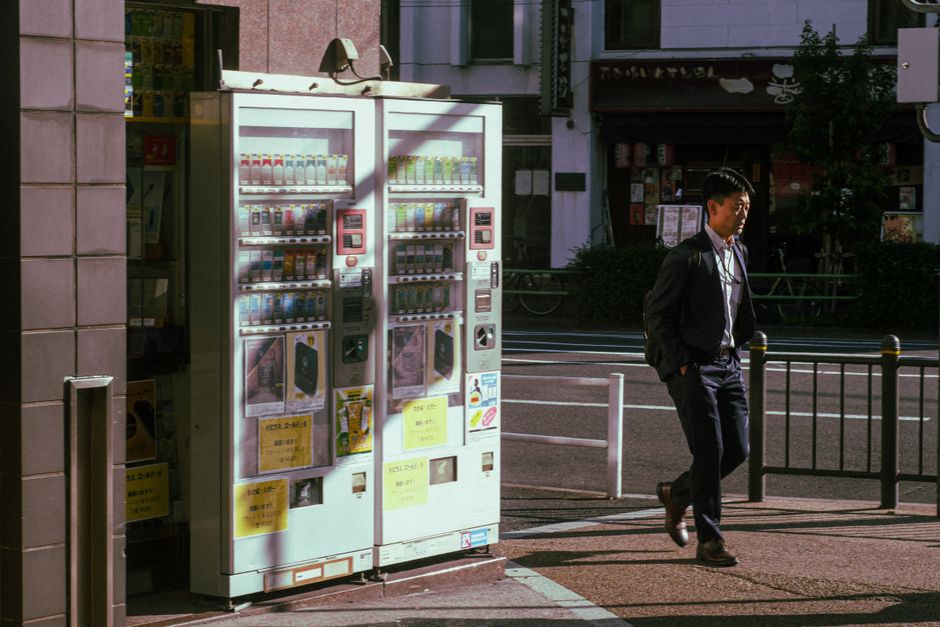
When evaluating small machines that make money, the standard pitch focuses heavily on gross revenue. Marketers show you a full coin box or a glowing dashboard of daily transactions, subtract the wholesale cost of the goods, and present the remainder as effortless cash flow. This narrative ignores the math of reality. A machine generating $300 a month in gross revenue sounds like a great side hustle until you realize it takes you five hours a month to service it, and the location takes a heavy cut.
Stay in the loop.
Get the latest posts and exclusive content delivered to your inbox.
Join 13 readers. No spam. Unsubscribe in one click, anytime.
Many passive income machines marketed to beginners yield an effective hourly wage that falls below minimum wage once unpaid restocking and maintenance labor enter the calculation, as the analysis below demonstrates. When you account for driving to the location, counting cash, troubleshooting paper jams, and sweeping up debris, your asset transforms into a demanding second job. To evaluate these opportunities accurately, we must abandon advertised potential and calculate the true unit economics of hardware ownership.
How to Evaluate Small Machines That Make Money
A snack vending machine grossing $300 a month pays you about ten dollars an hour once every real cost enters the math. That is barely above the federal minimum, and a single bad month drags it lower. It is the default outcome for solo operators who buy hardware without decomposing the unit economics first. Here is how each dollar leaks out, step by step, on a typical break-room machine.
Gross revenue: A decent break-room machine pulls in roughly $300 a month in sales.
Product cost: Wholesale snacks and drinks run about 40 percent of gross. On $300, that is $120 gone, leaving $180.
Location revenue share: The property owner typically demands a commission for hosting your machine. A standard split is 15 percent of gross, or $45. Your margin drops to $135.
Maintenance reserve: Coil motors burn out, bill validators misread, compressors fail. Setting aside $25 a month per machine covers the average repair cycle without forcing you to absorb a $200 part replacement in a single bad month. Margin falls to $110.
Depreciation: A $3,500 machine amortized over a realistic five-year service life costs $58 a month in lost hardware value. The IRS Section 179 deduction lets you expense equipment purchases upfront rather than spreading the deduction over years, which improves near-term cash flow but does not eliminate the real economic cost. Your true monthly profit is $52.
Unpaid labor: Servicing means a round-trip drive, restocking inventory, wiping down the glass, reconciling cash or card transactions, and clearing the occasional jam. For a single isolated machine, that is roughly five hours a month.
Divide $52 by five hours. Your effective hourly wage is about ten dollars. You should feel the margin compress at each step above, because that compression is what separates the marketing pitch from your bank deposit. Run this same decomposition across categories using industry vending machine business profit benchmarks and the effective hourly wage sorts winners from losers fast. Traditional passive income definitions imply minimal ongoing effort, but the math shows that physical hardware demands continuous unpaid intervention. Six variables, one division. Run it on every machine before you buy.
Five Small Machines Ranked by Effective Hourly Wage

Applying the unit economics framework above to five common hardware categories reveals a wide spread in owner profitability. The estimates below assume a solo operator running one to five machines in decent but not premium locations, with no full-time route staff. Your actual numbers will shift with location quality, local electricity rates, and labor efficiency, but the relative ordering holds across most real-world scenarios.
| Machine Type | Est. Monthly Gross | Primary Cost Driver | Est. Effective Hourly Wage |
|---|---|---|---|
| Standalone ATM | $200 to $600 | Vault cash opportunity cost, surcharge splits | $30 to $75 |
| Crypto Mining Rig | $100 to $800 | Electricity cost plus hardware depreciation | $5 to $50 |
| Snack and Beverage Vending | $150 to $400 | Restocking route labor and driving time | $8 to $25 |
| Automated Coffee Kiosk | $500 to $2,000 | Mechanic service calls and lease payments | $5 to $20 |
| Custom 3D Printing | $50 to $300 | Design and post-processing labor per unit | $3 to $15 |
Wage ranges apply the six-variable decomposition above to typical industry cost inputs; see the linked benchmarks per category for sourcing.
Traditional Snack and Beverage Vending Machines
Route density, not margin per unit, is the real lever. A single machine serviced in isolation is almost always unprofitable for a solo operator because the round-trip driving time alone can consume forty-five minutes for fifteen minutes of actual work. Operators who cluster six to ten machines along a tight driving route can service each stop in under fifteen minutes, which is what pushes the effective wage above minimum. The bag of chips with the best margin matters far less than how many machines you can service per driving hour. Calculating your true restocking labor costs across a dense route rather than a single unit is what separates a viable business from an expensive hobby. Retail inventory shrinkage statistics add further pressure, as theft and spoilage silently erode whatever margin the route density creates.
Standalone ATM Machines
Vault cash opportunity cost, not the machine, is the binding constraint. Your cash sitting in the cassette is capital that is not deployed elsewhere, and if a location owner demands sixty percent of the surcharge, your margin evaporates regardless of transaction volume. ATM machine ROI looks strong on paper because restocking takes minutes rather than hours, but only when you negotiate a favorable split and keep your vault cash rotating efficiently. The operator who wins is the one who secures high-traffic locations with cooperative property owners, not the one who buys the cheapest machine.
Cryptocurrency Mining Rigs
Electricity and depreciation are the entire bet. The rig is a depreciating option on token price. Crypto mining profitability hinges almost entirely on your cost per kilowatt-hour relative to the current market value of the token being mined. If you can access electricity below the global average production cost, the rig can generate genuine passive returns with zero physical labor. The catch is brutal depreciation. Crypto hardware depreciation schedules show that specialized ASIC miners can lose most of their resale value within two to three years as network difficulty rises and newer, more efficient chips enter the market. The payoff window is narrow, and the hardware is worthless the moment a more efficient generation makes your rig uncompetitive. At average commercial electricity rates, most rigs rank below traditional vending in effective hourly wage, which is why this category only earns its place when you secure below-market power.
Custom 3D Printing and Mini Manufacturing
Per-unit labor makes this a manufacturing service, not passive income. Every order requires file preparation, print monitoring, support removal, quality inspection, and packaging. Printers also fail constantly, and the learning curve for 3D printer maintenance is steep given nozzle clogs, warped beds, and filament breaks that demand hands-on intervention. The labor input per printed item is so high that your effective hourly wage often falls below what you would earn freelancing the same design work on a marketplace. This category only works if you sell high-margin custom pieces at premium prices, which is a craft business model, not a machine that passively generates cash.
Automated Coffee and Micro-Retail Kiosks
Mechanic calls and compliance overhead dominate, not the beans. These units contain pumps, grinders, refrigeration loops, and touchscreens, each a potential failure point that triggers an expensive technician visit. Food handling also means strict compliance with consumer product safety standards and local health codes, where a single failed inspection or contaminated milk line can shutter the unit for weeks. Securing a prime footprint means committing to a triple-net lease structure where you absorb property taxes, insurance, and maintenance on top of base rent, and the depreciation of automated retail machines accelerates rapidly when complex mechanical assemblies require repeated component replacement. The high gross revenue per unit masks a cost structure that quietly consumes most of it.
How to Raise Your Effective Hourly Wage on Machines
Passive income from machines is engineered through labor elimination, not stumbled upon. The operators who actually profit do not find magical machines; they build systems that strip hours out of the denominator of the hourly wage equation.
Cut Route Labor with Telemetry
Start with telemetry. A monthly subscription to remote telemetry monitoring software typically runs twenty to forty dollars per machine. On a twenty-machine snack route at twenty dollars per machine, that is four hundred dollars a month in overhead. But telemetry tells you exactly which machines need restocking before you leave the house, eliminating blind drive-by visits. Without it, servicing twenty machines takes about seventy hours a month; with it, you skip the unnecessary stops and drop to forty-five. On a route netting two thousand dollars monthly, subtracting the four hundred dollar bill leaves sixteen hundred, and sixteen hundred divided by forty-five hours yields about thirty-five dollars an hour, up from twenty-eight without telemetry. The system also flags empty coils and mechanical faults in real time, preventing the stockouts that silently drain revenue. For a route of that size, telemetry is the single highest-ROI investment a small operator can make.
Negotiate Location Splits Before You Buy
Next, negotiate the location split before you buy the machine. The economics flip dramatically depending on who holds leverage. ATMs can command zero-rent placements in high-foot-traffic spots because the property owner values the cash-access amenity for their customers and the surcharge revenue covers the overhead without consuming floor space. Coffee kiosks face the opposite dynamic. They occupy prime retail square footage, require plumbing and electrical hookups, and the property owner knows the unit generates visible revenue. Expect to pay ten to twenty-five percent of gross in a revenue-sharing agreement, plus the lease. Match the machine type to the negotiation leverage the location gives you, not the other way around.
Blend High-Labor and Low-Labor Machines
Finally, think in portfolios, not individual units. Pairing one high-labor machine with one low-labor machine on the same driving route averages up your effective wage. A snack vending machine that pays you twelve dollars an hour and an ATM that pays you sixty dollars an hour, serviced on the same thirty-minute stop, blend to a far healthier combined rate than either machine serviced alone. The ATM subsidizes the labor cost of the vending route, and the vending stop makes the ATM visit free of dedicated driving time. This is how solo operators push their blended hourly wage above thirty dollars without hiring route staff.
The Final Verdict on Machine Investing
For a solo beginner, the five categories rank by effective hourly wage as follows: standalone ATMs first, clustered snack vending second, crypto mining rigs third (only with cheap electricity), automated coffee kiosks fourth, and custom 3D printing last.
Start with a single ATM in a location where you have negotiated a favorable surcharge split, because it teaches you the business with the least unpaid labor. Avoid custom 3D printing if your goal is passive income, because it is a service business disguised as hardware. Before purchasing any machine, calculate two numbers: your effective hourly wage, which is net monthly profit divided by your monthly labor hours, and your payback period in months, which is total hardware and setup cost divided by that same net monthly profit. If the payback period exceeds eighteen months or the hourly wage falls below your local minimum, walk away from the deal.
Buy the machine only when both numbers survive the full cost decomposition, not when the marketing pitch sounds convincing.
Stay in the loop.
Get the latest posts and exclusive content delivered to your inbox.
Join 13 readers. No spam. Unsubscribe in one click, anytime.
About the author
Ryan Callahan
Staff Writer
Ryan reports on extra-income opportunities and personal finance, including side hustles, money-making apps, and investing basics, with a focus on clear, practical analysis.
Related Posts

Real Estate Syndication Due Diligence for Side Hustle Money
Real estate syndication due diligence for side hustlers: run the sponsor fee stack, test the flat-deal math, and know when a REIT fund beats the deal.
Rent Backyard for Passive Income Stack to $865 Monthly
Rent backyard for passive income by stacking Sniffspot, Neighbor, and PeerSpace on one plot to multiply per-square-foot yield after platform fees.

Stash Investing App Fees Cost 12% to 144% at $100
Stash investing app fees run 12% to 144% of a $100 balance per year. See the drag math from $100 to $5,000 and when to graduate to a free broker.