Self-Managing Rental Property? Run the Hourly Math First
Self-managing rental property is a priced part-time job. We tallied the hours on 1 to 3 units and tested whether Baselane buys back your evenings.
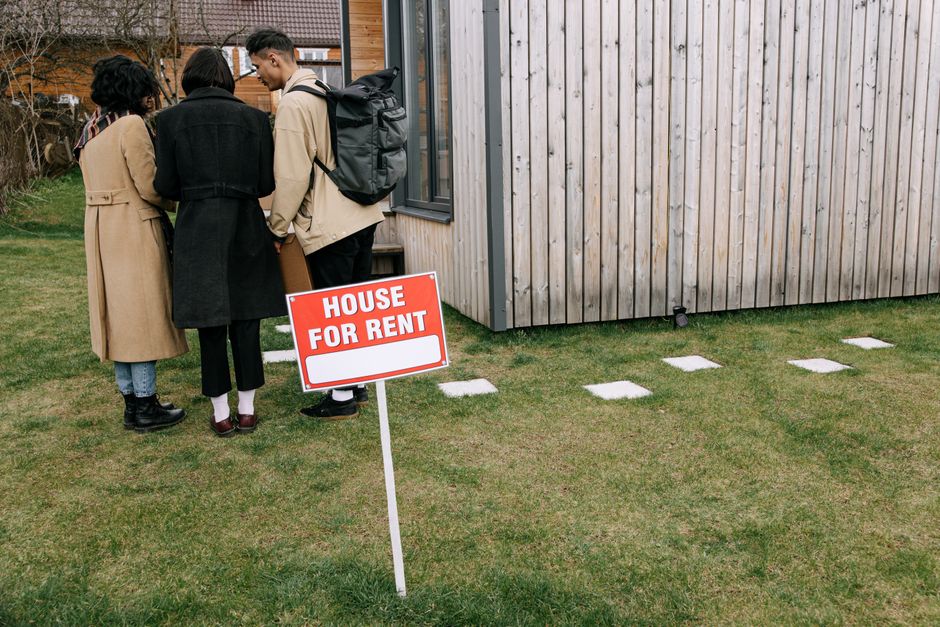
Rental content splits into two camps. One camp sells the story (rent checks, early retirement, quit your day job), and the other sells screenshots of landlord software. What almost nobody publishes is the arithmetic the decision actually hinges on: what the operating job pays per hour once you count the labor. This piece runs that math end to end on illustrative 1 to 3 unit portfolios, because a side hustler with a day job deserves a wage quote, not a vibe.
Stay in the loop.
Get the latest posts and exclusive content delivered to your inbox.
Join 26 readers. No spam. Unsubscribe in one click, anytime.
Run the numbers first and self-managing rental property stops being an identity and becomes a priced part-time job. The method has four moves. First, inventory the hours across five labor categories. Second, divide the management fee you would otherwise pay by those hours to get your effective hourly rate. Third, quote the property manager the same way, as a price per hour removed. Fourth, sort your tools into the ones that delete hours and the ones that just rearrange them.
Every hour range below is a transparent modeling assumption, not a vendor statistic. Swap in your own numbers. The conclusions that fall out of the arithmetic tend to survive reasonable adjustments to the inputs.
Where the Hours Go: Five Labor Categories
The landlord time commitment sorts into five buckets, and only two of them are steady. The rest spike.
| Labor category | Steady-state hours per month, 3 units | What causes a spike |
|---|---|---|
| Rent collection | 0.3 to 1.5 | Failed payments, partial payments, chasing |
| Tenant communication | 1 to 2.5 | Disputes, neighbor issues, lease questions |
| Maintenance coordination | 1.5 to 3 | Water heaters, roofs, weekend leaks |
| Bookkeeping | 0.5 to 1.5 | Year-end totals, receipts, CPA prep |
| Compliance and vacancy watch | 0.5 to 1.5 | Lease expirations, inspections, filings |
Added up, a 3-unit self-managed rental portfolio commonly runs about 4 to 10 hours a month in steady state, and a single unit runs roughly a third to half of that. Notice what the table is really saying: hours scale with events, not with doors. A quiet building is cheap to run whether it has one unit or three.
Maintenance is the category most likely to betray you, and the risk is structural. Harvard's Joint Center for Housing Studies tracks the rental stock in its America's Rental Housing report, and the stock is aging. Older homes tend to hand you more repair events per year, and every repair event is not just a plumber's invoice but your time spent triaging, collecting bids, and deciding repair versus replace.
Then there is turnover. Each move-out is a multi-week project worth 10 to 30 hours of owner labor: make-ready coordination, listing, showings, screening, lease signing, and deposit accounting. Assume a move-out per unit roughly every two years and a 3-unit portfolio averages about 1.5 turnovers a year, dropped onto your calendar without asking.
What Self-Managing Rental Property Pays Per Hour

The flattering version of side-hustle math divides annual cash flow by hours worked and announces you make $140 an hour, a figure that quietly credits your down payment, your equity, and your vacancy risk to your labor. The honest wage is narrower: the money you keep by not hiring a manager, divided by the hours the job takes.
Work it on an illustrative 3-unit portfolio renting for $1,500 per door, a $4,500 monthly roll. Single-family managers commonly quote somewhere around 8 to 12 percent of collected rent; treat that as market practice, not a published benchmark. NARPM's fee-structure guide covers the structures member firms actually use, from percentage of collected rent to monthly minimums and per-lease charges. At 10 percent, the fee you would pay is $5,400 a year. That figure is the wage pool for self-managing.
Now the denominator. Steady state at the midpoint runs about 7 hours a month, or 84 hours a year. Add the averaged turnover load of roughly 30 hours and the annual total lands near 115 hours, with an honest range of roughly 65 to 165 depending on how event-heavy the year is.
The effective hourly rate of the job:
- Midpoint: $5,400 ÷ 115 hours ≈ $47 per hour
- Quiet year: $5,400 ÷ 65 hours ≈ $83 per hour
- Event-heavy year: $5,400 ÷ 165 hours ≈ $33 per hour
Two features of this wage deserve attention. It is lumpy: a quiet month costs 5 hours while a turnover month can run 25 to 35, arriving during the exact weeks you least have room for it. And it is surprisingly scale-stable: run the same math on one $1,500 unit ($1,800 a year in avoided fees against roughly 35 annual hours) and you get about $50 an hour again. Growing from one door to three raises total pay more than it raises the rate.
What a Property Manager Costs Per Hour Removed
Property management fees are quoted as a percentage, but what you are buying is hours, so the only price worth computing is the fee divided by the hours actually removed.
On the $4,500 roll, the transfer splits like this:
- Moves to the manager: rent collection, tenant communication, maintenance coordination, most compliance, and the turnover project.
- Stays yours regardless: ownership-level bookkeeping for taxes, capital decisions, insurance and property tax administration, approvals above whatever spend threshold your contract sets.
On my midpoint model, that split removes roughly 85 of your 115 annual hours and leaves about 30 ownership-level hours behind. Now price the fee against the removal:
| Line | Arithmetic | Result |
|---|---|---|
| Sticker fee only | $5,400 ÷ 85 hours removed | $64 per hour removed |
| Lease-up fees | 50 to 100 percent of one month's rent per placement, and this roll averages 1.5 placements a year | adds $1,100 to $2,250 |
| All-in | $6,500 to $7,600 total ÷ 85 hours removed | $77 to $90 per hour removed |
Two structural distortions push small portfolios toward the high end. Monthly minimums bite hardest on cheap units and small rolls: a $100 minimum on an $800 unit is a 12.5 percent effective rate, not 10. And lease-up fees mean a manager gets paid extra in exactly the years you endure the most churn. Percentage-of-collected-rent pricing does align incentives somewhat, since the manager shares vacancy pain, but the effective hourly price still moves with your rent roll and your turnover count.
Before comparing anything, call three local firms and get the full sheet: percentage, collected versus scheduled rent, monthly minimum, lease-up fee, renewal fee, and any maintenance markup. That five-minute call converts an abstract 10 percent into a real hourly quote.
Deleting Work vs Reorganizing It: The Baselane Audit

Landlord automation tools fall into two kinds, and the test is simple: after adoption, does the hour disappear, or does it just move into an app? Run the audit on Baselane, the platform most often pitched at small landlords, which advertises core banking, rent collection, and bookkeeping on a $0 base tier with paid features priced per unit, per its pricing page.
Genuine work-deleters
- Rent collection automation. Autopay and ACH transfers with automatic reminders collapse the 0.3 to 1.5 monthly hours of chasing to nearly zero. What remains is exceptions: failed transfers, partial payments, the tenant who pays in cash.
- Rental property bookkeeping. A rent ledger auto-categorized against a linked bank feed turns year-end prep from a weekend into an export. This is the second real deletion, and it compounds every April.
Work-reorganizers
- Maintenance coordination. Message threads centralize communication, but the 8pm triage call, the vendor choice, the bid comparison, and the repair-versus-replace call remain yours. Software cannot smell a bad bid.
- Turnover. Listing tools and checklists track the project; the 10 to 30 hours inside it do not go anywhere.
- Screening and compliance. Pipelines organize applications, but the judgment and the legal discipline stay with you.
The verdict: a stack like Baselane can raise your effective rate on routine work dramatically (rent collection plus bookkeeping drops from 1 to 3 monthly hours to well under one) while never touching the heaviest category, maintenance. Tools answer the question of how to make quiet months quieter. They do not answer who handles the water heater.
The Hidden Labor: Deposits, Fair Housing, and Tax Books
Three compliance tasks routinely escape the ledger, and they are where the quiet-year wage quietly overstates the job. Each one costs minutes to do correctly and can cost thousands to get wrong, an asymmetry no hourly average can express.
Security deposits
States set their own caps, interest rules, itemization deadlines, and penalties. Miss a deadline and you can forfeit your deduction rights, sometimes multiplied, depending on the state. Price the risk honestly: skipping the deadline saves zero hours, because meeting it costs minutes of calendar work. The ledger records the minutes; the penalty clause does not read the ledger.
Fair housing screening
The protection is a written set of criteria (income threshold, credit floor, rental history) applied identically to every applicant, with records kept. A vibes-based decision is the highest-dollar 30 minutes in this entire ledger: the half hour you save buys exposure to a discrimination claim that no management fee or software subscription caps, and one sloppy application can reprice a full year of wage math.
Year-end tax books
IRS Publication 527 lays out the residential rental recordkeeping and expense rules you are substantiating against. An uncategorized year costs a lost weekend every April, and that weekend is exactly the hours the deletion stack from the Baselane audit reclaims, which makes bookkeeping automation the cheapest tail-risk insurance in the budget.
These hours are already inside the ranges above, so nothing here changes the denominator. What they add is variance the wage quote cannot show. Event risk, not door count, is what the wage quote hides, and event frequency is the same variable that drives the break-even thresholds in the next section.
Break-Even Rent Rolls for Three Operating Models
Now put the three operating models side by side on the illustrative $4,500 roll. Model A: self-manage with a free stack, about 115 annual hours. Model B: self-manage with a paid stack, where automation deletes roughly 30 hours of routine work, leaving about 85, plus your per-unit subscription cost. Model C: hire a manager at roughly $7,000 all-in, leaving about 30 ownership-level hours. The table prices your time at three rates.
| Your hour is worth | A. Free stack (115 h) | B. Paid stack (~85 h + sub) | C. Manager (~$7,000 + 30 h) |
|---|---|---|---|
| $25 | $2,875 | ~$2,125 + sub | $7,750 |
| $50 | $5,750 | ~$4,250 + sub | $8,500 |
| $100 | $11,500 | ~$8,500 + sub | $10,000 |
Self-managing wins outright until your time is worth roughly $82 an hour, the break-even where 115 owner hours cost as much as $7,000 in fees plus 30 residual hours. That threshold is not a constant. In an event-heavy year (165 hours, 40 residual) it falls to about $56. In a quiet year (65 hours, 20 residual) it climbs past $150. Same three doors, a threefold swing in the answer, driven entirely by event frequency. This is the core finding: the break-even rent roll for hiring a property manager is set less by door count than by turnovers and maintenance tickets per year, crossed with the hourly value you place on your own evenings.
Scale does eventually flip the verdict. Past roughly 5 to 10 doors, fees keep scaling linearly with rent while some labor categories (bookkeeping, rent collection) stop growing, so the manager's effective hourly price drifts down toward the sticker percentage. Small portfolios sit in the zone where self-managing usually wins on pure arithmetic.
Decision Rules: When the Job Clears Your Rate
So is self-managing rental property worth it? The arithmetic above says it pays a defensible $33 to $83 an hour at small scale, lumpy and on-call. Whether that clears your bar is a personal parameter, not a market fact. Five rules settle it:
- Count events, not doors. Your annual hours are predicted by turnovers and repair tickets, not unit count. Audit last year's events before anything else.
- Set one honest threshold. The wage your evening must clear, probably anchored to your day-job marginal rate or your freelance rate. Every comparison above flows from this number.
- If quiet months bore you but spikes break you, buy the deletion stack and build a vendor bench (a plumber, an electrician, a handyman you trust) rather than hiring a manager.
- If the on-call feeling itself is the cost, hire. No software deletes the judgment calls, and resenting the phone corrodes otherwise rational math.
- Re-run the ledger annually. Rent growth raises the wage pool; turnover luck moves the denominator; a growing roll shifts the break-even. The correct answer last year is not locked in.
Run your own numbers this week: pull twelve months of tenant emails and texts, log the hours by category, count turnovers and repair tickets, collect three local fee sheets, and compute both hourly prices. The whole exercise takes about an hour. That is the first hour of the job, and it is the one that tells you whether to take the rest of them.
Stay in the loop.
Get the latest posts and exclusive content delivered to your inbox.
Join 26 readers. No spam. Unsubscribe in one click, anytime.
About the author
Hannah Cole
Senior Editor
Hannah writes practical guides on building income outside a day job, from selling online to beginner investing, with a focus on clear explanations and real benchmarks.
Related Posts

Series I Bonds November 2026 Rate Math for Side Hustlers
Series I bonds November 2026 rate decoded: what a side hustler nets after the 12-month lockup and 3-month penalty, plus a ladder plan for lumpy income.

Cheap Condo Rental Investment Math After HOA Fees and Hours
Price a cheap condo rental investment honestly. The $8,400 Detroit condo run through 2026 HOA fees, capex, and hourly wage, versus the REIT alternative.

What a Brokerage Transfer Bonus Pays per Hour
Brokerage transfer bonuses promise free money. Price the ACAT fees, tax basis, and lost yield first to see when the reward beats your hourly rate.