Money Making Apps for Beginners Ranked by Real Hourly Pay
Money making apps for beginners ranked by effective hourly rate after unpaid time, payout thresholds, and cash-out fees. See which apps actually pay.

Money making apps for beginners sell you a number before they sell you anything else. Twenty dollars an hour to train chatbots. Up to $25 an hour delivering food. Fifty dollars for an hour of opinions. What the app store listings never show is what those numbers look like after a real month of use, once unpaid qualification time, payout minimums, cash-out fees, and deactivation risk have each taken a bite. Run that math and the leaderboard flips. Apps with modest headlines, AI training platforms and paid research studies chief among them, routinely out-earn the loud survey and microtask apps that dominate roundup lists, and take-home pay is the only pay that matters when you have five spare hours a week.
Stay in the loop.
Get the latest posts and exclusive content delivered to your inbox.
Join 20 readers. No spam. Unsubscribe in one click, anytime.
This guide ranks beginner-accessible app types by effective hourly rate instead of advertised rate, then hands you the four-deduction audit behind the ranking so you can price any app, including ones this article never names.
Why Advertised Pay Rates Mislead Beginners
Advertised rates describe best-case active-task pay: you, mid-task, with the work already found, approved, and paying. No beginner ever experiences that hour. Your first hours go to signups, demographic profiles, entrance assessments, screener surveys you fail on question three, and dead time between tasks when nothing is available. Divide the money that actually reaches your bank by every hour the app cost you and you get the effective hourly rate. That, not the store listing, is the number that predicts your first month.
Crowdwork researchers have measured the gap. A 2018 study of Turk workers presented at CHI found that unpaid work, including task search, qualification tests, and rejected submissions, consumed a substantial share of working time, and put the median wage at around $2 an hour once all of it was counted. Only a small fraction of workers cleared the US federal minimum. Mechanical Turk is an extreme case, but the mechanism travels to every category here: every minute spent hunting for work is a minute the headline rate silently averages down, and the apps with the shiniest numbers are often the ones that make you hunt longest.
The Four Deductions Behind an Effective Hourly Rate
The audit is short enough to run while you wait for a verification email. Four deductions, applied to any app's advertised pay.
- Unpaid onboarding and qualification time. Assessments, practice tasks, screener failures, and idle time waiting for work or approval. AI training platforms can ask for a few hours of testing before your first paid minute, with no guarantee you pass.
- Payout thresholds. Money below the cash-out minimum is not your money yet. A balance you cannot realistically reach is marketing, not income.
- Cash-out delays and fees. Weekly payout cycles hold your cash, instant cash-out features sell it back to you for a fixed fee, and reward verification adds days more.
- Deactivation and forfeiture risk. Dormancy clauses, account reviews, and algorithmic bans can strand sub-threshold balances, and terms of service on many platforms permit keeping them.
Effective hourly rate = cash actually received ÷ every hour the app cost you
The formula is blunt on purpose. Denominator honesty is what separates a side hustle from a slot machine with extra steps, and it is the only unit of comparison that treats your time as the scarce resource it is.
Money-Making Apps for Beginners, Ranked by Effective Rate
Most lists of the best money making apps for beginners rank by advertised payout and stop there. The table below ranks by what the four deductions leave behind. Treat the effective-rate bands as planning estimates built from commonly advertised rates and typical user reports, not audited medians; your market, schedule, and skills will move you inside or past them.
| Rank | App type | Typical headline | Where the hours leak | First-month effective rate (est.) |
|---|---|---|---|---|
| 1 | Paid research studies | $50 to $150 per session | Unpaid screeners, scheduling lag | $15 to $40 an hour |
| 2 | AI training platforms | Around $20 an hour | Unpaid assessments, approval waits | $12 to $20 an hour |
| 3 | Test scoring | High teens per hour | Unpaid certification, seasonal gaps | $8 to $18 an hour |
| 4 | Local gig and errand apps | $15 to $25 an hour | Travel, waiting, fees, fuel | $8 to $16 an hour |
| 5 | Mystery shopping | $10 to $30 per shop | Travel both ways, report writing | $3 to $9 an hour |
| 6 | Survey and microtask apps | A few dollars per survey | Task hunting, screenouts, thresholds | $1 to $4 an hour |
Two patterns decide the order. The top ranks go to app types with high active pay, short unpaid runways, and payouts you can actually reach; research studies and AI training win because their deductions are front-loaded and mostly one-time. The bottom ranks go to types where the deductions are continuous. You re-pay the hunting tax on every survey, every shop, every microtask, forever.
The ranking also reframes realized income. A lower-headline app with a $5 threshold and two-day payouts can put more money in your account during month one than a higher-headline app holding you under a $25 minimum on a slow cycle. Rank order is a starting point, not a verdict. The tiebreaker is always how the payout mechanics fit your life.
Five Worked Examples From Our Per-App Audits
Five categories this site decomposes platform by platform elsewhere, compressed here into the deductions in motion.
AI training platforms
DataAnnotation's pay breakdown advertises around $20 an hour for many projects, and contributors who clear onboarding report active rates in that neighborhood. The front door is unpaid. Entrance assessments run a few hours, approval can take days to weeks, and some applicants are never accepted at all. Price a realistic first week: eight hours invested, three of them assessment and setup, five of them paid work at $20. That is $100 across eight hours, or $12.50 effective. By month two the same app trends toward its headline because the unpaid cost is one-time. Unpaid qualification time is the entire story in AI training pay.
Paid research studies
Marketplaces like the User Interviews marketplace pair you with paid sessions, with listings across this category commonly advertised at $50 to $150 for 30 to 90 minutes, and Prolific's payment model goes further by building a minimum hourly rate into every study listed on the platform, a structural guarantee almost nothing else here offers. The deductions are unpaid screeners, five to ten minutes each, most of which you will fail, plus the lag between applying and being selected. The arithmetic still lands well: one $60 session reached after 70 total minutes of screening and session time clears roughly $50 an hour. Volume is scarce, so this is not a full-time lane. Per hour, though, nothing else on this list is close.
Test scoring
Remote scoring for companies like ETS pays hourly rates that ETS salary reports on Glassdoor commonly place in the high teens, with the usual caveat that such figures are self-reported. The deductions are unpaid training and certification you must pass before scoring opens, and work that arrives in bursts tied to test calendars, so slow weeks pay nothing. A scorer who works most hours of a busy project approaches the headline rate. A scorer who catches a third of the burst carries the same training cost across far fewer paid hours, and the effective rate sags accordingly.
Laundry and errand apps
Gig apps that pay per task make the advertised rate nearly meaningless until you know your route density. Business Insider ran a $5,000-a-month courier profile on SudShare that made headlines precisely because it is an outlier, a full-time operation in a dense market rather than a median. For a beginner, single-order pickups scattered across town can fall under minimum wage once fuel and drive time count. The same app, batched into a Saturday route of back-to-back orders, can beat its own headline. Delivery follows the same physics, and shopper postings on Indeed advertise the flexible-hours upside without mentioning the density dependency. Errand apps are a math problem whose answer changes with your zip code and your calendar, not a scam.
Mystery shopping
The MSPA Americas shopper FAQ is candid that shops pay modest fees, often part fee and part reimbursement. Take a generic shop and count everything: $15 fee, 20 minutes in the store, 25 minutes of driving each way, 20 minutes writing the report. Ninety minutes for $15 is $10 an hour before fuel, and plenty of shops pay less. Chained into one efficient loop on a day you were already out, mystery shopping can clear double digits. As isolated errands, the mystery shopping effective hourly rate sits in the single digits, which is exactly why it ranks where it does.
The Payout Threshold Trap and Other Money Leaks
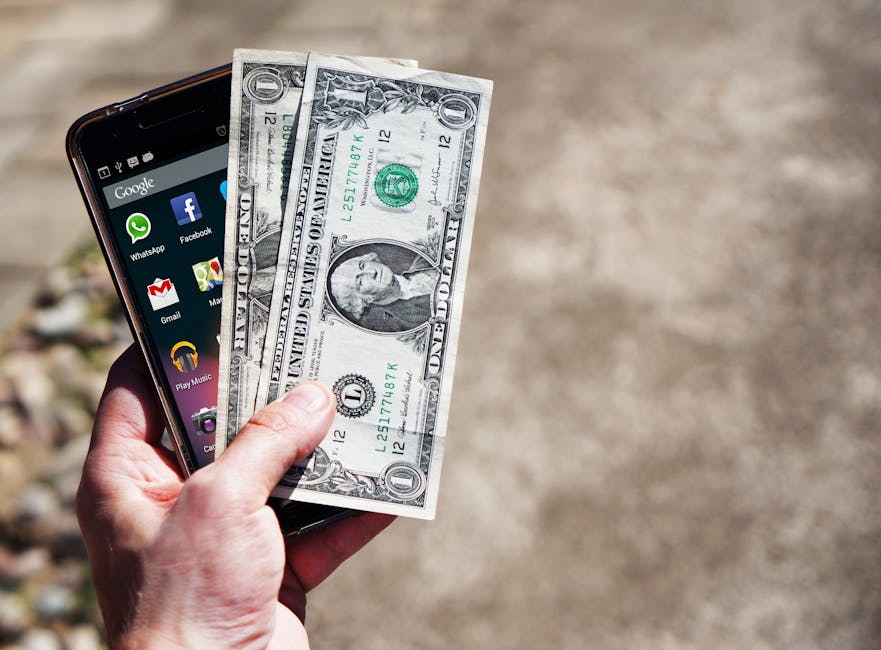
Three leaks strand beginner money, and all three bite hardest at small balances.
Thresholds turn effort into hostages. PayPal redemptions on Swagbucks typically start around $25 under Swagbucks' redemption rules. At a $3-an-hour effective rate, that is roughly eight hours of work before your first dollar becomes real, and if you quit at hour six the balance just sits there. Dormancy policies on many platforms can eventually zero it. Sub-threshold money is the app's money until you cash it.
Instant cash-out fees are priced to bite beginners.DoorDash's Fast Pay terms carry a small fixed fee per transfer, typically about $2. On a $150 cash-out that is noise. On a $20 cash-out it is a 10 percent haircut. Beginners cash out small amounts by definition, so instant cash-out fees on gig apps systematically cost the newest users the most. Waiting for the free weekly cycle is usually the better trade unless you genuinely need the cash today.
Deactivation can swallow pending pay.HRW's Gig Trap report documents gig workers losing access to pending earnings after deactivation, frequently through algorithmic decisions with limited appeal. The defense is behavioral: cash out the moment you cross a threshold, and never leave an app holding more than you would leave in an unattended vending machine.
Matching App Types to Your Schedule and Cash Needs
The same app ranks differently depending on how your free time arrives, because batching spreads unpaid time across more paid minutes. Fragmented minutes pay the hunting tax every session. A single block pays it once.
| Your constraint | Best fit | Why it wins |
|---|---|---|
| Ten fragmented minutes on weeknights | Surveys and microtasks with the lowest thresholds you can find | Low ceiling, but money-making apps with low payout thresholds convert dead minutes into cash you can actually reach |
| One or two free evenings | Research screeners plus an AI training assessment | One-time unpaid cost, high active pay once inside |
| A free Saturday block | Batched errand routes, scoring sessions, stacked studies | Batching is where effective rates peak |
| Cash needed inside a week | Weekly-cycle apps with low thresholds | Buy speed only when the fee math favors it |
| No car, laptop only | AI training, research studies, scoring | No travel deduction at all |
Apps to make extra money cost nothing to try, which is exactly why people end up running ten of them badly; the stack that works is narrower and duller. Pair an AI-training backbone, whose unpaid assessment is a one-time cost that batching pays back, with a low-threshold microtask filler for dead minutes. Then keep the habit that holds the stack together: cash out at every threshold crossing, because a phone full of half-finished accounts is only a collection of stranded balances.
Questions Beginners Ask Before Starting
How much do money-making apps actually pay per hour?
Plan around the table's bands: $1 to $4 an hour for survey and microtask apps, $15 to $40 for paid research studies, and the other types spread in between. The floor is measured rather than guessed, since the crowdwork research above put median take-home near $2 an hour once task hunting counted. For any single app, one logged session settles it better than any store listing: divide the cash that landed by every hour the app cost you, screens and dead time included.
Which apps pay real money fastest?
Every mainstream mechanism is one of two things: a free weekly cycle, or an instant transfer that costs about $2. On a $150 balance that fee is rounding error, so take instant pay whenever it suits you. On a $20 cash-out the same fee is a 10 percent haircut, so wait for the free weekly cycle unless the cash is genuinely urgent. Thresholds gate both paths, which means the fastest app for you is whichever minimum you can already clear.
What happens to my balance if an app deactivates me?
Treat the in-app counter as a claim rather than cash, because many platform terms reserve the right to hold dormant or disputed balances, and deactivation decisions are frequently algorithmic with little appeal. If money you earned is withheld, screenshot the counter and the terms, then complain to the Federal Trade Commission; the FTC's refunds program has returned money to consumers when enforcement actions succeed.
Should I run more than one app?
Yes, exactly two, picked to feed different hours rather than duplicate them: an AI-training platform for weekday evenings once the assessment is behind you, plus batched errand routes on a free Saturday. Ten apps at once fails mechanically, because every threshold takes longer to reach and every balance sits idle instead of compounding into a payout.
You have five to ten hours and one first month. Spend them like an investor rather than a lottery player: audit before you commit, batch whatever batches, and cash out at every crossing. The modest-headline apps will quietly out-earn the loud ones, and now you will know exactly why.
Stay in the loop.
Get the latest posts and exclusive content delivered to your inbox.
Join 20 readers. No spam. Unsubscribe in one click, anytime.
About the author
Ryan Callahan
Staff Writer
Ryan reports on extra-income opportunities and personal finance, including side hustles, money-making apps, and investing basics, with a focus on clear, practical analysis.
Related Posts
Apps That Pay Daily, Ranked by Real Payout Speed
Apps that pay daily, ranked by real payout speed after instant cashout fees, payout minimums, and pending holds. See when fast money beats higher pay.

GigU Driver Pay in 2026, the Fully Loaded Audit
GigU driver pay in 2026, audited: real hourly earnings after deadhead miles, insurance gaps, and thin ride volume, benchmarked against Uber.
Measure Rideshare Market Saturation With Your Own Trip Data
Track requests per online hour, dead miles, and queue waits to measure rideshare market saturation, then rank the standard fixes by real hourly pay.